For the typical weekend golfer, a reliable 3-wood is a bridge between driver distance and iron play. The right model combines a forgiving head, an easy launch, and a shaft that supports smooth contact on a variety of lies. The five picks below emphasize forgiveness and consistent distance without sacrificing control, making them strong options for players seeking confidence off the fairway and on long approaches.
The selections focus on different strengths: maximum forgiveness, higher launch, and stable performance across common on-course lies. Each model is designed to help the average golfer hit more fairways and approach shots with less dispersion, turning tough par-fives into reachable birdie opportunities. Use this guide to compare how each 3-wood aligns with your swing speed, preferred shaft feel, and typical course conditions.
| Product | Brand | Notable Feature | Loft / Length Note |
|---|---|---|---|
| Orlimar Escape #3 | Orlimar | Wide loft range; shallow face; low CG | 3-wood variant; broad loft options in the Escape lineup |
| Pinemeadow Yukon 3 | Pinemeadow Golf | Low-torque graphite shaft; forgiving | Standard 3-wood loft |
| WENGH Golf Fairway 3 Wood | WENGH | Counterweight tech; larger sweet spot; higher MOI | 3 Wood (43.5″ length) |
| Adams Tight Lies 3 | AdamsGolf | Extended Face Technology; mis-hit forgiveness | 3 Wood; 16° loft |
| Orlimar Escape HL #3 | Orlimar | Wide lofts; wrap-around face; internal weighting | 3-wood to 15-wood range |
Orlimar Escape #3 Fairway Wood

The Orlimar Escape #3 is part of a family designed to cover a wide range of lofts, including specialty high-lofted options. Its shallow face height helps players preserve speed on tight lies, while the low center of gravity promotes a high, soft landing on approach shots. For average golfers, this combination supports a confident launch and forgiving mis-hits, reducing left-right dispersion as you move from fairway to greenside approaches.
Regular-flex graphite shafts further assist a smoother transition into impact, which can be especially helpful for golfers who don’t want to struggle with a demanding swing. The Escape #3 is well suited for players who want a single club to fill distance gaps between long irons, hybrids, and the driver, making it a versatile addition to any bag.
Pinemeadow Yukon 3 Fairway Wood

The Yukon 3 Fairway Wood from Pinemeadow Golf emphasizes forgiveness with a low-torque graphite shaft, which helps reduce twisting at impact. The model is described as highly playable with a strong feel, making it a practical choice for golfers who want an easy-to-hit 3-wood that consistently travels long and straight. This club tends to reward smooth tempo and solid contact, which translates to more dependable rounds for golfers who frequently face longer approach possibilities off the fairway.
For players who want to streamline their bag without sacrificing distance, the Yukon 3 offers a straightforward setup that complements mid-to-high swing speeds. Its forgiving design helps maintain confidence when striking off less-than-perfect lies, helping you keep your longer holes within reach.
WENGH Golf Fairway 3 Wood
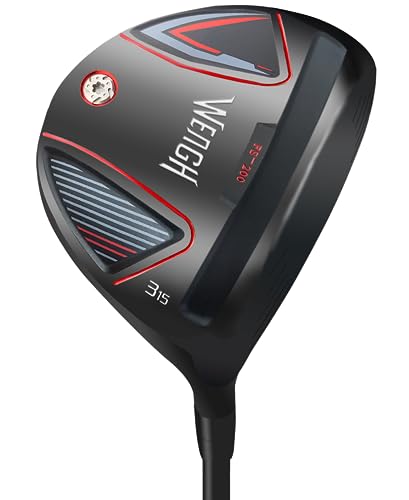
WENGH’s Fairway 3 Wood integrates counterweight technology within its rod head, aiming for faster ball speed and improved spin and trajectory. The stainless steel forged face is designed to expand the hitting area and enhance the sweet spot, helping players preserve distance even on off-center hits. The larger head profile and deeper front and rear shapes contribute to a higher MOI, which translates into better forgiveness across a range of lies and swings.
With a focus on ease of use, this model supports steady, predictable flight for factor-friendly performance. Golfers who want a 3-wood that remains cooperative across variable turf conditions will appreciate how the head design and face geometry support confident contact and consistent distance control on longer fairways.
Adams Tight Lies 3 Fairway Wood

The Adams Tight Lies 3 Fairway Wood emphasizes a high launch and long distance from various lies. Engineered to increase ball speed and launch, it features Extended Face Technology to widen the strike zone and improve performance on mis-hits. The cambered Tri-Sole design adds versatility, allowing effective performance from many lie conditions, including tight fairways and rough fringe. This makes it a practical option for players who frequently encounter challenging turf and want a reliable tee-to-green option off the fairway.
With a regular flex graphite shaft in a 16-degree configuration, the Tight Lies 3 provides a balanced combination of feel and forgiveness. Golfers who appreciate a strong, confident look at address and a stable, forgiving ball flight will find value in this model when replacing longer irons or bridging gaps between hybrids and fairway woods.
Orlimar Escape HL #3 Fairway Wood

The Escape HL line offers a wide range of lofts, allowing players to attack the green from various positions with options from #3 to #15 wood (or the equivalent of a mid-iron). The wrap-around face construction provides an ultra-thin, variable-thickness face to boost ball speed and distance, while progressive internal heel weighting helps square the face at impact to promote a draw or consistent flight. For average golfers, this family supports a versatile setup that can adapt to different course layouts and personal swing tendencies.
With its emphasis on launch and forgiveness, the HL model can be particularly effective for players who want to keep their approach shots accurate while exploring different loft gaps. The combination of face technology and weighting distribution contributes to a stable, forgiving performance across lies that commonly challenge less experienced players.
Buying Guide
Choosing the right 3-wood involves balancing forgiveness, distance, and control. This buying guide outlines the main considerations and offers a framework to help you compare models across brands and loft options.
- Forgiveness and MOI: Look for a larger, more forgiving head and higher MOI (moment of inertia) to reduce dispersion on off-center strikes. Models with counterweight technology or heavier back weighting often deliver more stable trajectories.
- Loft and launch angle: For average golfers, a 3-wood with a moderate loft that promotes high launch can help get the ball airborne easily while still providing adequate roll on the fairway. Consider options that also offer a set of higher lofts for versatility as you upgrade your bag.
- Shaft material and flex: Graphite shafts are common for wider forgiveness and smoother tempo. Regular or mid-regular flex typically suits many recreational players, especially those faster with irons and hybrids.
- Head design and geometry: A wider, deeper face and a slightly larger head can enhance forgiveness and confidence at address. Wrap-around or slightly oversized faces often help maintain contact on mis-hits.
- Face technology and mis-hit performance: Some models feature enhanced face geometry or speed channels that help maintain ball speed on mis-hits, reducing distance loss when you don’t strike the center.
- Versatility and adaptability: If you frequently play from fairways with varying lies, a model offering a broad loft range or multiple wood options (3-wood to 15-wood) can simplify distance gaps and lie adjustments.
- Fit to skill level and course conditions: Beginners or casual players benefit from forgiving designs and lower swing speeds that still deliver reliable distance. On links or rolling fairways, consider how a higher launch can stabilize your approach shots.
- Durability and warranty: Brands offering robust materials and fair warranty coverage can provide long-term confidence as you experiment with different 3-woods.
In practice, the best choice depends on your swing characteristics, typical course layouts, and how you want a 3-wood to complement your driver and irons. For many players, a model with a forgiving head, a graphite shaft, and a launch-friendly loft range offers the most practical performance upgrade. Testing several options, ideally with a launch monitor or a fitting session, can help you find the right balance between distance, accuracy, and consistency across common on-course situations.