Air-integrated dive computers simplify underwater planning by linking with a wireless transmitter to display tank pressure, air time, and depth on a single screen. This reduces hoses and clutter while providing real-time data for safer dives. Below are five top options from SHERWOOD SCUBA, Garmin, and Shearwater that combine readability, durability, and smart features for American divers looking for reliable air integration.
Here is a quick summary of the chosen models to help you compare at a glance.
| Product | Brand | Air Integration | Notable Feature |
|---|---|---|---|
| SHERWOOD Wisdom3 Air Integrated Dive Computer | SHERWOOD SCUBA | Yes | Easy-to-read display; large characters; 7 alarms |
| Shearwater Teric Dive Computer | Shearwater Research | Yes (via transmitter) | AMOLED color display; rugged build; high customization |
| Garmin Descent Mk3i Dive Computer | Garmin | Yes | Watch-style with SubWave messaging; multi-dive support |
| Garmin Descent Mk2i With T1 Transmitter Bundle | Garmin | Yes | Integrated pressure monitoring on up to 5 tanks; long battery life |
| Garmin Descent Mk3i With T2 Transceiver Bundle | Garmin | Yes | Includes T2 transceiver; compact titanium design |
SHERWOOD Wisdom3 Air Integrated Dive Computer

The Wisdom3 is designed for intuitive operation, making it accessible to divers who prefer a straightforward interface. It emphasizes readability, describing each screen with clear text rather than icon sets, which reduces the learning curve for new users. Its large display provides high contrast text, ensuring quick interpretation at depth or in low-light conditions. The interface prioritizes safety with audible and visual alarms—seven in total—to alert divers to key conditions like depth, budgets of air, or ascent rate. This model remains a practical choice for divers seeking a reliable, easy-to-use system.
Air integration in the Wisdom3 consolidates important data into one place, streamlining your dive planning. When paired with an appropriate transmitter, you can monitor remaining air time and tank pressure on the same screen as your depth and dive time. The Wisdom3’s robust, simple design minimizes complexity while maintaining essential data access during critical moments of a dive. Its balance of clarity, reliability, and safety features makes it well-suited for both new divers upgrading from basic computers and experienced divers who value a dependable backup in a compact package.
Durability and build quality are evident in SHERWOOD’s approach. The Wisdom3 is built to perform in typical recreational settings, with straightforward maintenance and a user-friendly learning curve. Divers who value a traditional screen experience, or who want a device that remains easy to operate after years of use, may find Wisdom3 to be a dependable companion for many dives. Overall, it combines essential air-integration functionality with a readable, uncomplicated interface that supports safe, efficient underwater exploration.
Shearwater Teric Dive Computer
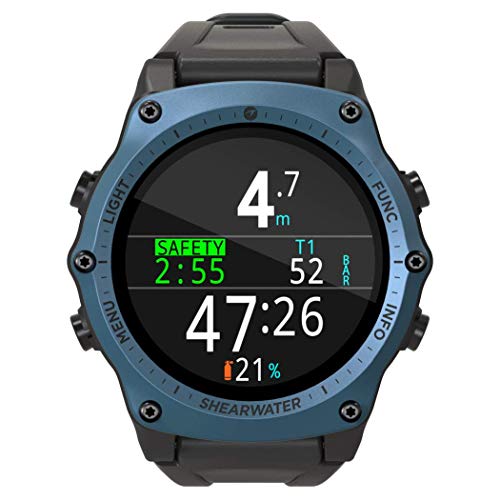
The Teric from Shearwater Research is a high-end, feature-rich dive computer designed for divers who want a large, vivid display and extensive customization. It sports a full-color AMOLED display, 1.39 inches in size, which delivers sharp visuals with deep blacks that remain legible under varying lighting conditions underwater. The screen supports multiple layout options and watch faces, letting divers tailor the interface to their preferences and mission profiles.
Durability is a core focus. The Teric uses a sapphire crystal window and a robust stainless steel bezel, with a ballistic nylon polymer case to withstand demanding underwater environments. This rugged construction helps maintain long-term readability and reliability even in dive-heavy itineraries. The Teric also supports a wide range of strap options, providing comfort and fit for different wrists and wear styles, which is especially valuable for multi-dive days or travel.
While not every Teric configuration ships with air integration out of the box, it supports air integration through compatible wireless transmitters, enabling you to monitor tank pressure and air time on the same display as depth, dive time, and decompression data. This makes the Teric a strong option for divers who want a premium, highly customizable instrument that can scale with their air-integration needs. Its blend of readability, durability, and customization features makes it a standout choice for advanced divers who value control over their data presentation.
Garmin Descent Mk3i Dive Computer

The Garmin Descent Mk3i represents a premium, watch-style dive computer that combines deep-water capability with smart, everyday wearability. It features a 1.4-inch AMOLED display with a scratch-resistant sapphire lens and a titanium bezel, offering a durable, crisp interface for both diving and daily use. The device is designed for a 200-meter dive-rated case, with metal leakproof inductive buttons and multiple dive modes suitable for recreational through technical diving and even freediving. This model emphasizes versatility and a refined user experience.
One of the Mk3i’s standout capabilities is its SubWave sonar technology, which enables diver-to-diver communication and data exchange with supported devices at distances up to 30 meters. When paired with the Descent T2 transceiver, it can monitor tank pressures and depth for up to eight divers, enhancing group dive coordination and safety. The Mk3i also supports GPS, offline mapping, and smartwatch functions, allowing divers to track workouts, routes, and day-to-day activities without switching devices. This combination of features makes the Mk3i a compelling option for enthusiasts who want a single, capable tool for both underwater exploration and everyday life.
Air integration is a key part of Garmin’s Descent ecosystem. The Mk3i works with a Transmitter (T2) for real-time pressure data across compatible tanks, ensuring you have a cohesive view of air status during your dive. The overall package emphasizes a modern, multi-purpose device that can function as a capable dive computer while doubling as a fitness watch and navigation tool. This makes it an attractive choice for divers who value seamless integration between underwater performance and daily wearability.
Garmin Descent Mk2i With T1 Transmitter Bundle

The Descent Mk2i with the T1 transmitter bundle delivers a compact, watch-style dive computer with integrated air-pressure monitoring across multiple tanks. The Mk2i uses a 1.4-inch color display that remains legible in bright sunlight and underwater conditions. Garmin reports substantial battery life in dive mode, making it practical for longer excursions or trips with multiple dives per day. The included T1 transmitter expands air integration across up to five tanks, using SubWave sonar to share data with other divers in your group and to track air time and air consumption efficiently.
Pairing the Mk2i with the T1 transmitter creates a versatile system that balances size, performance, and data access. For divers who prefer a smaller, lighter device that still delivers robust air integration and smart capabilities, this bundle offers a compelling combination. The Mk2i’s design emphasizes energy efficiency and extended use during multi-day trips, while its SubWave network keeps you connected with other divers on your team. This model is well-suited for recreational and entry-to-midlevel technical diving where simplicity and reliability are valued.
Garmin Descent Mk3i With T2 Transceiver Bundle
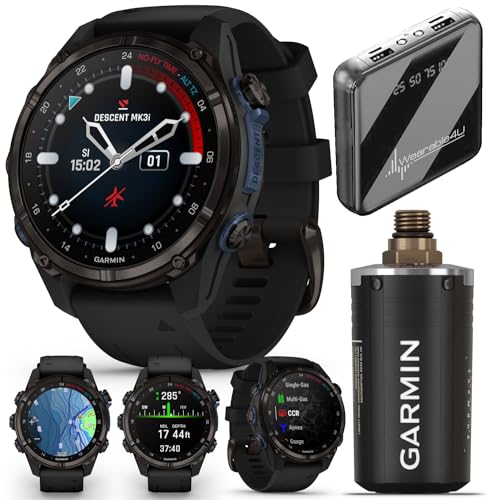
This Wearable4U bundle centers on the Garmin Descent Mk3i specifically configured for smaller wrists, featuring a 43 mm carbon gray titanium case and an included T2 transceiver. It comes with an extra-long strap and a full accessory set for on-the-go charging and data transfer. The Mk3i delivers Garmin’s premium dive computer experience in a compact form, with a 1.2-inch AMOLED display and a high-contrast lens designed for easy reading underwater. The 200-meter dive-rated case and robust titanium construction deliver confidence for frequent divers, while the T2 transceiver expands the air-integration network across your dive group.
In this configuration, you benefit from a streamlined, portable system that doesn’t compromise on capability. The Mk3i’s dive-first design includes multiple dive modes for recreational, technical, and freediving scenarios, making it a versatile choice for divers who travel and participate in varied diving environments. The combination of the Mk3i’s compact display, titanium build, and included transceiver offers a modern air-integrated solution that emphasizes portability without sacrificing depth and air data access. This bundle is particularly attractive for divers seeking a lighter, all-in-one package with expandability through Transmitter technology.
Buying Guide
Air integration and transmitter ecosystems
Air integration combines tank pressure data with the dive computer’s display, typically via a wireless transmitter. When selecting a model, confirm how many transmitters and tanks it supports, whether it can display live pressure for all linked cylinders, and if it supports SubWave or other network protocols for diver-to-diver communication. If you already own transmitters, verify compatibility with your chosen computer to avoid compatibility gaps during surface intervals and multi-diver dives.
Display, readability, and interface
Display quality matters underwater. Look for high-contrast, readability-friendly screens, with options such as AMOLED or color LCDs. Screen size impacts legibility with gloves and in low-light environments. A touchscreen can speed interactions, but physical buttons are often more reliable underwater. Consider models offering multiple screen layouts and watch-face customization so you can tailor the interface to your diving style and urgency of information during a dive.
Durability, depth rating, and build quality
Durable cases and strong crystal materials protect against cleaning solvents, salt, and impacts. Most air-integrated dive computers target recreational to technical dives with depth ratings around 200 meters. Titanium bezels, sapphire lenses, and reinforced housings add resilience for extended trips. If you dive in cold water or frequent keystone environments, confirm the device’s resistance to fogging, freezing, and battery performance under such conditions.
Battery life and charging flexibility
Battery capacity affects how many dives you can complete before charging. Look for devices with extended dive-mode life, efficient processors, and convenient charging options. Some units pair with USB-C power banks or offer rapid charging. If you travel often, consider battery efficiency and the availability of spare chargers or batteries at your destination to avoid gaps in capability during trips.
Size, comfort, and daily wearability
Watch-style designs provide daily wearability and GPS-equipped features beyond diving. Consider the overall weight, form factor, and strap options, especially if you have a smaller wrist or prefer swapping straps for comfort. A device that doubles as a fitness watch can enhance value, but ensure its dive-readiness and strap durability meet your typical diving schedule.
Data management, connectivity, and ecosystem
Think about data access after a dive: logbooks, Bluetooth syncing, cloud backup, and compatibility with third-party apps. Some models offer offline maps, GPS navigation, and dive planning tools that can simplify trip planning. If you want to share dive data with friends or instructors, confirm that the unit offers reliable syncing and exporting options across platforms.
Value, warranty, and brand support
Air-integrated dive computers are investment pieces. Check warranty terms, service options, and the availability of authorized service centers in the U.S. for long-term maintenance. Brand support quality matters: a strong network of service technicians reduces downtime and helps you get back to diving quickly if issues arise.
In sum, the best air-integrated dive computer for you depends on your priorities: a simple and readable interface, a rugged, feature-rich device with group dive capabilities, or a compact watch-style computer that doubles as a daily-smart device. By weighing display quality, air integration capabilities, and ecosystem compatibility, you can select a model that enhances safety while matching your diving lifestyle.