Finding a reliable sleeping bag that balances warmth, weight, and price can be challenging. This guide highlights five budget-friendly options that deliver solid warmth for three-season camping without breaking the bank. Each pick comes from trusted outdoor brands and offers portability, durability, and comfort at a compelling price point. Whether you’re a weekend hiker, a family camper, or a student planning trips, these sleeping bags provide dependable value.
To help you compare quickly, the table below presents a quick snapshot of the selected products. Details like temperature ranges and notable design features are summarized to guide your first pass before diving into deeper product sections.
| Product | Brand | Key Benefit | Approximate Comfort Range | Notable Feature |
|---|---|---|---|---|
| Naturehike Ultralight Down Sleeping Bag | Naturehike | Ultralight warmth for backpacking | ~42–52°F | 650 fill power duck down; independent down channels |
| Kelty Mistral Budget Down Sleeping Bag | Kelty | Budget-friendly warmth | 20°F (rating advertised) | 68D recycled Teffeta shell; offset quilt pattern |
| Oaskys 3-Season Camping Sleeping Bag | oaskys | Reliable three-season comfort | 50–68°F | 210T outer; 190T lining; double-filled for warmth |
| Elevon 3-4 Season Sleeping Bag | Elevon | Versatile outdoor versatility | 50–68°F | Waterproof outer; lightweight; transforms into blanket |
| MalloMe All-Season Sleeping Bag | MalloMe | All-age adaptable warmth | 50–77°F | Waterproof hex-tech shell; compression sack |
Naturehike Ultralight Down Sleeping Bag

This Naturehike option is designed for ultralight backpackers who want warmth without bulk. It uses a substantial quantity of 650 fill power duck down to deliver loft and insulation in a compact package. The bag is offered in multiple size choices, including CW295 (medium) and CWM400 (large), allowing a snug fit for different frames and sleeping styles. The weight is around 20 ounces, making it easy to carry on multi-day treks.
Construction emphasizes heat retention through an independent channel design, ensuring down stays in place and loft remains intact for a warm touch from head to toe. The recommended comfort range sits around the low 40s to low 50s Fahrenheit, which suits three-season use in mild climates. For first-time fluffing, a quick tap before packing helps restore maximum loft. The shell provides weather resistance suitable for damp backpacking nights, helping you stay warmer as conditions vary.
Overall, this bag targets budget-minded hikers who still expect efficient warmth and compact packing. Its balance of down fill, weight, and sizing options makes it a practical choice for weekend trips and light mountain excursions alike.
Kelty Mistral Budget Down Sleeping Bag
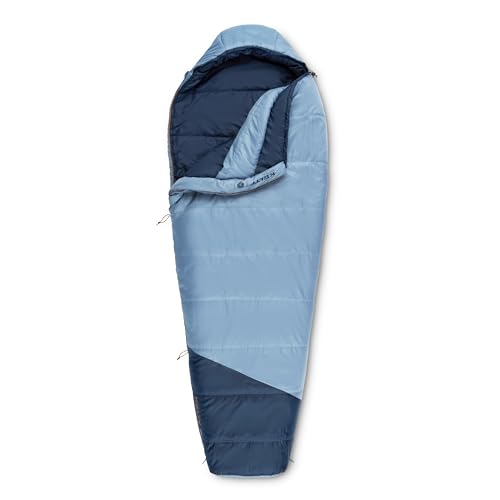
The Kelty Mistral is positioned as a highly affordable option that still delivers solid functionality. It uses a 550 fill power down, paired with a durable outer shell and a soft inner liner to strike a balance between warmth and budget. The bag emphasizes practical features over complexity, making it accessible for casual hikers and campers who want dependable performance without extra frills.
One of Kelty’s notable design choices is the offset quilt pattern, which promotes even insulation distribution and minimizes cold spots. The bag’s outer shell employs recycled Teffeta polyester, combining durability with a more sustainable fabric choice. This combination is particularly appealing for active travelers who value lasting construction and easy care for three-season use. While it’s not a high-temperature extreme bag, it handles typical spring, summer, and fall nights with confidence when paired with appropriate layers.
For budget-conscious buyers, the Mistral represents a pragmatic blend of warmth, weight, and durability. It’s suitable for campus trips, weekend camping, and entry-level backpacking, where straightforward performance matters more than additional gadgets or premium fabrics.
Oaskys 3-Season Camping Sleeping Bag

The Oaskys bag covers three seasons with a design that emphasizes warmth without excessive weight. It uses double-filled technology to enhance insulation while remaining manageable for hikers and campers who prioritize simplicity and value. The outer shell is made from 210T anti-tearing polyester, and the lining uses 190T polyester pongee, combining strength with a comfortable feel against the skin.
A practical feature is the bottom zipper that allows foot ventilation, keeping users from overheating on milder nights. The hood includes an adjustable drawstring to trap warmth around the head when conditions grow chilly. With a comfort range oriented toward mild to cool conditions (approximately 50–68°F), this bag suits spring and fall trips and cool summer evenings without demanding premium gear.
Overall, Oaskys presents a reliable option for budget-conscious campers who want three-season capability with durable materials and straightforward care. It’s well-suited for backpackers who prioritize function and practicality over luxury features.
Elevon 3-4 Season Sleeping Bag

Elevon offers a versatile sleeping bag designed for three to four seasons with a focus on portability and adaptability. The bag uses a waterproof outer shell and hollow cotton filling to deliver warmth in a range that commonly spans 50–68°F, while keeping overall weight around three pounds. This makes it a strong pick for hikers who want reliable warmth without carrying heavier gear.
Portability is enhanced by a compact carry sack that measures roughly 7.9 by 14.2 inches, easing backpack organization. When needed, the bag can be opened fully to act as a blanket, increasing its usefulness for car camping, travel, or your vehicle’s emergency kit. The skin-friendly lining, coupled with a durable shell, supports repeated outdoor use across different weather conditions, all without a heavy price tag.
In short, Elevon provides a flexible, budget-friendly solution for campers who value both warmth and multi-use capability. It works well for weekend hikers, festival-goers who need quick warmth, and travelers seeking a simple, dependable sleeping bag without extra complexity.
MalloMe All-Season Sleeping Bag
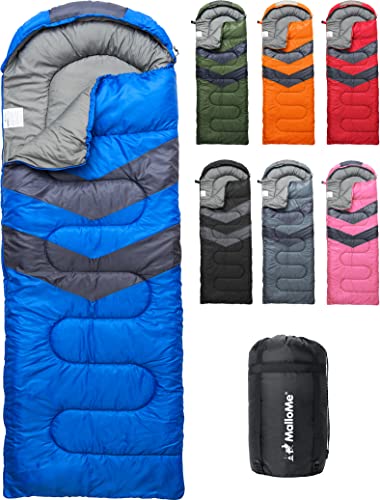
MalloMe emphasizes year-round use with an all-season design rated for about 50–77°F, making it a versatile choice for families and solo campers alike. It accommodates taller individuals up to roughly 6 feet and weighs around three pounds, balancing space and portability. The outer shell features a waterproof hex-tech construction with double-layered stitching to help resist moisture and extend durability in damp environments. The 3D inner synthetic fill enhances loft and warmth without relying on down.
Included with the bag is a compression sack, simplifying packing and transport. The bright color options also appeal to younger campers and families, while the robust build ensures reliability across varied outdoor conditions. This bag is a practical, budget-friendly option for car camping, hiking trips, and school outings where predictable warmth and easy care are priorities.
Buying Guide
Temperature and Comfort Essentials
Understanding temperature ratings helps you choose the right bag for your climate. Look for three numbers commonly listed on bags: comfort, limit, and sometimes extreme. Comfort is the temperature at which a typical sleeper will feel adequately warm; limit indicates where a sleeper would begin to feel cold. Budget bags often focus on three-season warmth, with ratings in the 40–70°F comfort range. If you camp in damp or windy environments, prioritize bags with better loft and weather-resistant shells to maximize warmth even when the thermometer drops slightly.
Insulation Type And Loft
Down insulation delivers superior warmth-to-weight but can be pricier and less forgiving in damp conditions. Synthetic insulation remains warmer when wet and dries more quickly, making it attractive for budget bags and damp climates. Some budget bags combine both, or offer hollow-fiber fillings that strike a balance between warmth, weight, and affordability. When shopping, note fill power for down (higher numbers mean more loft) and understand that loft correlates with warmth but also affects pack size.
Weight, Size, And Packability
For backpacking, weight and packability are critical. Many budget options aim to keep weight around 2–3 pounds with compact packing sacks. Pay attention to available sizes; some brands offer multiple length options to fit different heights, which improves comfort and warmth. A bag that compresses well in its sack and fits inside your backpack is generally preferable for longer trips. Also consider the carry size when choosing for vehicle camping or travel where space is less constrained.
Durability And Weather Readiness
Durability depends on fabric strength, stitching, and zippers. Look for shells with tear resistance and smooth, snag-free zippers. Water resistance varies; some bags include water-repellent shells or DWR coatings, which help during light rain or dew. For damp environments, consider synthetic insulation options or down bags with proper baffles to prevent insulation from shifting when wet or compressed.
Fit, Size Options, And Versatility
A proper fit ensures maximum warmth without wasted space. Check length options and width, especially if you’re taller or broader. Some bags convert to blankets or offer knee-depth ventilation, increasing versatility for lounging around a campsite or hostel. If you often split sleeping duties with a partner, a rectangular or semi-rectangular design may be advantageous for sharing warmth and comfort.
Budget vs. Feature Trade-Offs
Budget-friendly sleeping bags typically emphasize core warmth and durability over premium features. Prioritize insulation type, loft, weight, and fit rather than bells and whistles. If you expect damp nights, lean toward shells with water resistance and synthetic fills, which retain warmth when damp and dry faster. For dry climates and strict ultralight goals, a down-filled bag with good loft can be worth the investment. Always balance price with expected use to maximize value over time.
Practical Comparisons By Use Case
- Ultralight backpacking: choose the lightest, highest-loft option within your budget, with efficient channeling for even warmth.
- Family or kids camping: prioritize ease of care, size options, and brighter colors for visibility and safety.
- Three-season backpacking: aim for a bag rated around 40–60°F comfort, with durable shell for damp nights.
- Car camping or festivals: flexibility matters; a bag that doubles as a blanket can add convenience.
- Budget-conscious travelers: synthetic fills or lower fill-power down offer good warmth for the price and easier maintenance.