Choosing the right golf ball for the short game can boost control, spin, and greenside feel. This guide highlights five practical options, from foam practice balls to performance models, that help players refine approach shots, chipping, and putting around the green. Each selection offers a different balance of feedback, durability, and cost, so you can practice precisely where it matters. Use the quick table below to compare core benefits at a glance, then explore detailed sections for practical insights and usage tips.
| Product | Key Benefit |
|---|---|
| GoSports Foam Golf Practice Balls | Safe indoor/outdoor practice with realistic feel and limited flight. |
| BirdieBall Practice Golf Balls | True feel with limited flight; great for schools and home practice. |
| Callaway Supersoft Golf Balls | Soft feel with increased speed and greenside control. |
| Callaway Warbird Golf Balls | Distance with reliable greenside trajectory and control. |
| US Games Color My Class Golf Balls | Beginner-friendly training with color differentiation. |
GoSports Foam Golf Practice Balls

GoSports offers a set of 16 foam balls designed for safe practice at home, indoors or outdoors. The balls feature a realistic dimple texture that mimics real golf balls while delivering a limited flight, enabling practice of chipping and pitching within tight spaces. The foam construction minimizes impact on walls and furniture, making them ideal for beginners, juniors, or players rebuilding touch around the greens. Use them for short game reps without risking damage to your living space.
- Foam construction for safety
- Realistic dimple texture for genuine feel
- Limited flight to suit small spaces
- Indoor and outdoor usable
- Comes in a 16-ball pack
BirdieBall Practice Golf Balls

BirdieBall delivers training balls with a true feel and a limited flight distance, typically around 40 yards from a full swing. The design provides feedback that closely mirrors real golf ball physics, including sound and trajectory, but keeps practice contained. BirdieBall is widely used by golf schools and individual players seeking repeatable greenside feedback without overlong flights. This makes it a practical choice for refining chip and short approach consistency in limited spaces.
- Limited flight, about 40 yards
- True feel and flight characteristics
- Widely used in teaching environments
- Engages proper swing tempo and contact
- Endorsed by teaching pros
Callaway Supersoft Golf Balls

Callaway Supersoft focuses on a soft feel coupled with higher ball speed. The HyperElastic SoftFast Core is engineered to unlock faster driver and iron speed, while maintaining a soft greenside feel. The Hybrid Cover combines distance with soft touch and durability, and the cover’s design aids greenside spin and control on short game shots. This balance makes Supersoft a versatile option for players seeking a forgiving ball that still delivers touch around the greens and solid forgiveness on mis-hits.
- HyperElastic SoftFast Core for speed and softness
- Soft feel with increased distance potential
- New cover system for improved greenside control
Callaway Warbird Golf Balls
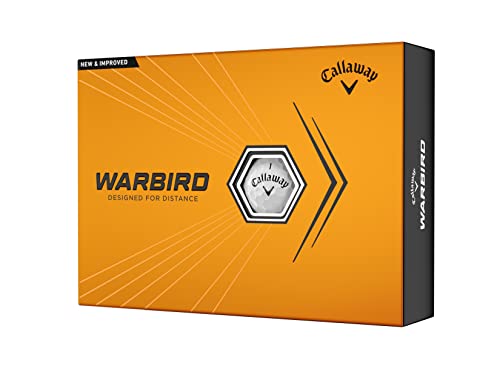
Warbird is built for maximum ball speed off every club, featuring a large, high-energy core that promotes a strong launch and distance. HEX Aerodynamics reduces drag and leads to increased speed and flight stability, while the ionomer cover and large core provide greenside feel and control from a dependable two-piece design. While often associated with distance, Warbird’s predictable flight and solid greenside performance make it a viable option for players who want dependable short-game behavior with ample roll-out on chips and pitches.
- High-energy core for speed
- HEX Aerodynamics for reduced drag
- Ionomer cover with greenside feel
US Games Color My Class Golf Balls

US Games Color My Class Golf Balls are designed to assist beginners with easy identification and tracking during practice. The Prism Pack includes six color options, and the balls roll like traditional golf balls on most surfaces, making them suitable for early greenside work and basic short-game repetition. The color-coding helps players notice impact patterns and flight differences, supporting structured practice sessions for new golfers as they build fundamentals around the greens.
- Six color options for color-coded training
- Roll like traditional golf balls on most surfaces
- Great for beginners and group practice
Buying Guide
Short-game performance depends on a mix of feel, control, and practice practicality. When choosing a ball for greenside work, consider the following factors:
- Feel and compression: Softer balls often offer better greenside feel and control, especially on chips and delicate pitches. Harder balls may reduce spin but can deliver more consistency for some players.
- Spin and greenside control: A ball’s cover and core influence how much spin you can generate on short shots. For greenside control, look for models that emphasize feel and consistent spin around the green.
- Flight and trajectory: Short-game practice benefits from balls with predictable, controllable flight. Foam or limited-flight options are ideal for indoor practice, while regulary engineered balls provide realistic feedback on outdoor greens.
- Durability and space: Foam and practice balls are safer for indoor use and smaller spaces, but they wear faster than standard balls. Balance durability with your space and frequency of use.
- Indoor vs. outdoor suitability: If your primary practice area is indoors, foam or limited-flight balls help minimize collateral damage while still building touch. For outdoor use, standard or performance balls with greenside control are beneficial.
- Practice goals: Decide whether you want to focus on chipping, pitching, bunker work, or full-swing greenside control. Your choice should align with the ball’s flight, feel, and feedback.
- Budget and value: Pack size and durability influence value. Foam balls offer lower-cost, repeated-use practice, while premium balls provide longer-term performance around the greens but at a higher price per ball.
- Color coding and training aids: Color variants and training-specific features can help with tracking progress, impact patterns, and shot decision-making during practice sessions.