Indoor bike racks come in several styles, from freestanding vertical stands to gravity-based solutions and folding designs. The right rack accelerates tidying up a crowded garage or apartment hallway while protecting wheels and rims from damage. The following five options are well-suited for American homes, balancing stability, ease of use, and space efficiency in common storage scenarios. Each model supports a range of bike sizes, from compact road bikes to larger mountain machines, and many install without tools.
To help you compare at a glance, the summary table below highlights core specs such as capacity, wheel fit, and mounting style. From simple freestanding towers to gravity-mounted designs, these picks address tight spaces, renters’ restrictions, and multi-bike needs with clear benefits.
| Product | Brand | Bike Types | Max Load |
|---|---|---|---|
| Sttoraboks Vertical Bike Stand | Sttoraboks | Road, Mountain, Kids bikes (24"-29"), tires up to 4" wide | 55 lb |
| BikeHand Foldable Bike Stand | BIKE HAND | MTB & Road, heavy bikes | Not specified |
| CHEPARK Bike Floor Stand Rack | CHEPARK | 20"-29" bikes, tires up to 2.4" | Not specified |
| Delta Cycle Michelangelo 2-Bike Rack | Delta Cycle & Home | Road/MTB/Hybrid, two bikes | 80 lb total |
| RAD Cycle Mighty Rack Two Bike Floor Stand | RAD Cycle Products | Two bikes; versatile orientation | Not specified |
Sttoraboks Vertical Bike Stand

The Sttoraboks vertical stand is a freestanding bike rack designed for indoor use without drilling. It features four 360° lockable wheels for easy movement between rooms, garages, or storage areas. The wheels’ locking capability helps prevent unwanted sliding while distributing the load to improve stability and reduce tipping. Its design accommodates most bikes with wheel sizes from 24″ to 29″ and tire widths up to 4″. The height-adjustable lifting and retracting rods offer flexibility to fit a range of bike heights, with a recommended maximum load of 55 pounds per bike. Note: bikes with fenders, baskets, or built-in stands may not fit.
Because it is freestanding, this model is particularly well-suited for renters or settings where wall mounting isn’t possible. No drilling is required, and assembly is quick with the included manual. The combination of mobility and stability makes it a solid choice for a tidy garage or apartment hallway where floor space is at a premium.
BikeHand Foldable Bike Stand

The BikeHand Foldable Bike Stand features a patented push-in design that tilts the front holder as you push the bike into the rack. This system is particularly helpful for heavier bikes such as downhill, mountain, and beach bikes, enabling easier loading without lifting. The rack provides three contact points securing the tires, delivering greater stability than stands that only grip a single point. A deeper holder helps keep the front or rear wheel firmly in place, reducing tilt and accidental shifts during storage. The base design is engineered to prevent tipping unless a substantial force is applied.
When not in use, the rack folds flat in seconds, offering substantial space savings. This foldability makes it easy to move the rack between vehicles for rides or to stash it out of the way in a closet or trunk. The combination of stability and portability makes it a versatile option for garaged storage or apartment garages where floor space must be optimized.
CHEPARK Bike Floor Stand Rack

The CHEPARK bike floor stand is a user-friendly freestanding solution that emphasizes portability and ease of use. It requires no lifting to load the bike—simply roll the wheel onto the tray. This is ideal for apartments, garages, or offices where a lightweight yet sturdy storage option is desired. The stand stores bikes vertically, reducing floor space usage and making it simple to access bikes when needed. Its simple design also helps limit potential rim or spoke scratching during parking, a practical consideration for everyday use.
Fully adjustable slider positions let the bike sit firmly in the rack, accommodating 20″–29″ road, cyclocross, mountain, and hybrid bikes with tires up to 2.4 inches. While designed for indoor use, it is not recommended for heavy e-bikes. This model is a good fit for users who want a straightforward, no-fuss solution that balances lightness with reliable support.
Delta Cycle Michelangelo 2-Bike Rack
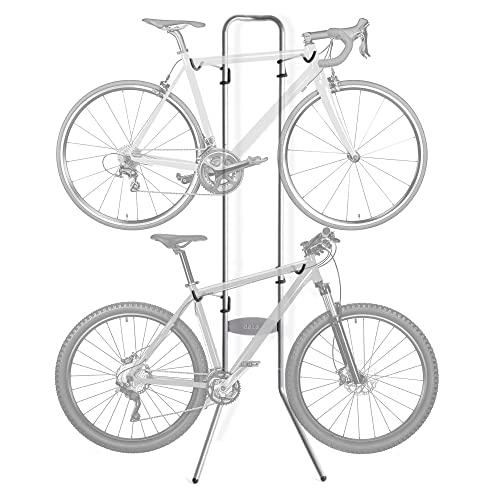
Delta Cycle’s Michelangelo Two Bike Gravity Stand offers a gravity-based storage solution that requires no permanent mounting or drilling. Its wall-lean design securely suspends two bicycles with a total load up to 80 pounds (40 pounds per bike). Its compact footprint—approximately 84 inches tall by 26 inches wide by 16 inches deep—helps maximize storage without intruding on living space. The arms are adjustable to fit different bike geometries, and the steel construction is complemented by a powder-coated finish for durability. Rubber feet help keep the rack stable on various floor surfaces.
As a gravity stand, this model excels in apartments or garages where you want vertical storage and minimal installation. The adjustable arms make it suitable for a range of bike styles, including road, MTB, and hybrid models, while the absence of wall mounting protects interior walls from potential damage over time.
RAD Cycle Mighty Rack Two Bike Floor Stand
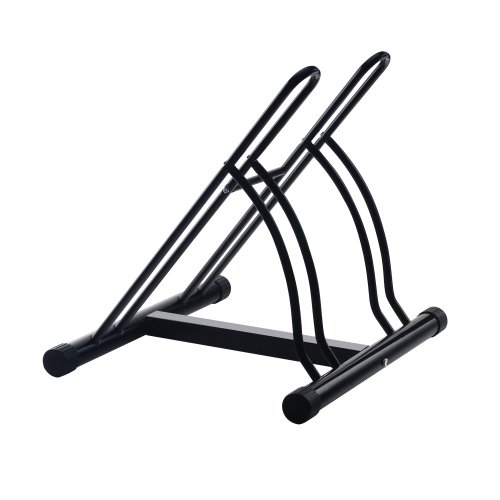
The RAD Cycle Mighty Rack is a heavy-duty two-bike floor stand built from tubular steel, designed for robust daily use. It’s marketed for quick, clamp-free storage in which two bikes can be parked without extensive setup. The stand emphasizes ease of use: roll the bikes into the rack and leave them in place, avoiding clamps or complicated mounting systems. Users can store bikes in the same direction or alternate directions, providing flexibility for spaces where bikes are frequently moved in and out or where aisle width varies.
This model is well-suited for garages or basements where long-term bike storage needs are paired with a straightforward loading experience. While it lacks explicit weight specifications in the listing, its tubular steel construction and dual-bike design emphasize durability and practical daily use in home storage spaces.
Buying Guide
Choosing the right indoor bike rack depends on space, usage, and bike variety. Consider how many bikes you need to store, the typical bike sizes you own, and whether you prefer freestanding units, gravity-based systems, or foldable designs. Below are key purchase considerations and how they apply to the five options above.
- Space and footprint: Freestanding towers and gravity stands save wall space but require floor space. If you have a narrow hallway or small garage, a vertical or gravity-based solution can maximize floor clearance.
- Bike capacity and weight: If you own two bikes or heavier mountain bikes, prioritize models that explicitly support dual bikes or higher weight limits (for example, up to 80 lb combined on gravity stands). If weight per bike is a concern, verify per-bike limits and total capacity before purchase.
- Wheel width and tire compatibility: Tire width and wheel diameter determine fit. Some stands accommodate up to 4″ tires, while others cap at 2.4″ tires. Ensure your bikes’ tires fall within the supported range.
- Loading and unloading: Patented push-in or tilt designs reduce lifting effort for heavy bikes. Folding stands offer space savings when the rack isn’t in use, while gravity stands emphasize stability and simplicity without complex mechanisms.
- Stability and safety: Look for lockable wheels, anti-tip features, and sturdy bases. Gravity-based stands benefit from weight distribution but may require careful alignment, whereas freestanding racks should have a wide, stable stance to prevent tipping.
- Installation and maintenance: Freestanding racks typically require minimal setup and no wall modification, ideal for renters. Wall-mounted or ceiling-mounted systems demand tools and potential wall repairs but can save floor space in tight areas.
- Durability and materials: Steel builds with powder-coated finishes resist corrosion and daily wear. Rubber feet and protective pads help prevent rim scratches and floor scuffs, extending the life of your bikes and furniture.
- Versatility and expansion: If you anticipate adding more bikes later, choose a system that can scale—either by adding another stand or selecting a dual-bike model with sturdy stability.
- Price and warranty: While not the deciding factor alone, align your choice with budget and after-sale support. A robust warranty and accessible customer service can be valuable for longer-term use.
In short, for renters or small spaces, freestanding models such as the Sttoraboks Vertical Bike Stand or CHEPARK Floor Stand provide flexible placement without wall damage. For multi-bike households, gravity-based or two-bike floor stands like the Delta Michelangelo and RAD Mighty Rack offer dependable vertical or horizontal storage with durable construction. Foldable designs from BikeHand deliver a balance of portability and stability for active riders who transport bikes to a vehicle or a trailhead. Evaluate your space, bike types, and daily handling to select the best indoor rack for your home.