Choosing a camping knife means balancing toughness, portability, and safety. The five knives below cover folding, fixed-blade, and machete styles to suit light hikes, bushcraft, and backcountry tasks. Use the table for a quick comparison, then read detailed notes to select the right tool for your outdoor needs.
| Product | Type | Key Feature |
|---|---|---|
| NedFoss 3-in-1 Pocket Knife | Folding | Seat belt cutter |
| Gerber Ultimate Survival Knife | Fixed Blade | Fire starter |
| Mossy Oak Survival Hunting Knife 15″ | Fixed Blade | 15″ reach |
| Mossy Oak 8.5″ Fixed Blade | Fixed | Full-tang |
| Kershaw Camp 10 Machete | Machete | 10″ blade |
NedFoss 3-in-1 Pocket Knife

The NedFoss DA75 is a compact folding knife designed for outdoor tasks. Its 8Cr14Mov blade offers sharpness and corrosion resistance, with a durable drop point and a black oxide finish for rugged use. The handle blends G10 and aluminum to provide a secure, comfortable grip in wet or cold conditions. Practical field features include a liner-lock mechanism for blade security, a built-in seatbelt cutter, and a glass breaker for emergencies. A pocket clip allows quick access, making this knife versatile for campsite chores, trail repairs, and daily carry on hiking trips.
Gerber Ultimate Survival Knife

The Gerber Ultimate Survival Knife is a robust fixed-blade option designed for bushcraft and hunting. It features a half-serrated, stainless steel drop point blade for versatility and a textured rubber grip for control in wet conditions. A hammer pommel adds striking capability, and the sheath includes an integrated sharpener and a Ferro rod fire starter for field prep. An emergency whistle enhances signaling, while the rugged build supports camping, fishing, and trekking in varied weather and terrain. This knife serves as a dependable all-around tool for outdoor pursuits.
Mossy Oak Survival Hunting Knife 15″ Fixed Blade

This Mossy Oak survival knife is a 15-inch fixed-blade tool built for serious outdoor work. It features a 10-inch blade with a 5/32 inch thickness and a clip point blade with a saw back, finished in black anodize for corrosion resistance. A rubber handle provides a secure grip, and the heavy-duty nylon sheath offers belt carry for convenient access on long treks. The knife is well-suited for camp setup, shelter building, and survival practice where blade length and durability matter.
Mossy Oak 8.5-Inch Full-Tang Knife
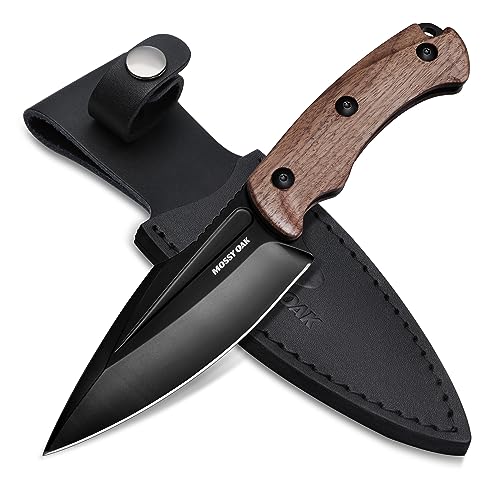
The Mossy Oak 8.5-Inch Full-Tang Knife emphasizes strength and balance. It uses a 7CR17MOV stainless steel blade for good edge retention and corrosion resistance, with a full-tang construction for rugged use. The wooden handle offers comfort and balance, with ergonomic grooves to reduce slippage in wet or sweaty conditions. A lanyard hole enables quick attachment to a cord or pack, and the included sheath supports secure carry for camping tasks, shelter construction, or field prep where durability is key.
Kershaw Camp 10 Tan Machete

The Kershaw Camp 10 Tan Machete is a heavy-duty outdoor tool designed for brush clearing, camp setup, and trail work. It features a full-tang 10-inch blade crafted from 65Mn carbon steel and finished with a black powder coat for durability and easy maintenance. A rubberized overmold grip and built-in hand guard ensure secure handling in rugged conditions. The included sheath keeps the machete safely stored on a belt or pack, making it ideal for clearing campsites, creating paths, or splitting light firewood in remote locations.
Buying Guide
Choosing the right camping knife involves comparing several practical factors. The guide below covers common perspectives to help select a tool that matches your activities, environment, and experience level.
- Purpose and style: Folding knives save space and are easy to carry, while fixed-blade options offer rigidity for heavy-duty tasks. A machete is best for brush clearance and large-scale camp work. Match the blade type to typical tasks you expect on your trips.
- Blade material and durability: Carbon steels (like 65Mn or 7CR17MOV variants) often offer good edge retention but require more maintenance to resist corrosion. Stainless steels provide corrosion resistance with solid edge retention for everyday camping use.
- Blade length and weight: Shorter blades (2.5–4 inches) are ideal for kitchen prep and light chores; mid-sized blades (4–6 inches) cover most campsite tasks; longer blades (8–12 inches) excel in batoning, hedge work, or self-reliant bushcraft. Consider total knife weight for backpacking comfort.
- Fixed vs folding: Fixed blades are generally stronger and safer for heavy-duty tasks but require a sheath and more carry space. Folding knives are compact and easy to carry but have moving parts that may require more maintenance and care.
- Handle design: Look for full tang construction and ergonomic grips (G10, rubber, or wood) that stay secure in wet or cold conditions. A good grip reduces fatigue and increases safety during demanding tasks.
- Safety and reliability features: Locking mechanisms (liner lock, frame lock) and sturdy blades matter for safe operation. A reliable sheath, pocket clip, and lanyard options improve accessibility and security on the trail.
- Maintenance and care: Regular cleaning, drying, and oiling protect blades from rust. Some steel types are easier to sharpen in the field; others hold an edge longer but need proper sharpening tools.
- Special features: Built-in fire starters, whistles, glass breakers, and belt cutters add emergency utility. Evaluate whether these extras justify potential cost and weight.
- Portability and accessibility: Consider how the knife fits in your pack, belt, or clip system. Quick-access knives can save time during emergencies or rapid campsite tasks.
- Budget and value: A higher upfront cost may yield longer life, better materials, and stronger warranties. Balance price with expected use and maintenance needs.
- Legal considerations: Some jurisdictions regulate blade length or carry methods. Be aware of local laws, especially when hiking across multiple states or protected areas.
In practice, choose a knife that aligns with your typical camping activities—a versatile folding knife for light treks, a reliable fixed-blade for bushcraft, or a machete for heavy-duty campsite work. Prioritize blade durability, grip security, and carry practicality to ensure the tool supports safe and efficient outdoor tasks.