Vertical jump training relies on plyometric box exercises to develop leg power, speed, and explosiveness. The right plyometric box supports a variety of workouts—from box jumps to step-ups—while protecting joints during demanding sets. For a home gym, choosing a versatile, durable option matters as you progress from beginners to more advanced plyometric work. Below are five top picks that balance adjustable heights, safe surfaces, and stability. Each is well-suited for building a higher, quicker vertical leap without requiring a full training facility.
| Product | Brand | Adjustable Heights (inches) |
|---|---|---|
| BalanceFrom 3 in 1 Plyometric Jump Box | BalanceFrom | 16, 20, 24 |
| papababe 3-in-1 Plyometric Jump Box Large | papababe | 20, 24, 30 |
| OLIXIS 3-in-1 Plyometric Jump Box | OLIXIS | 16, 20, 24 |
| papababe 3-in-1 Plyometric Box Small | papababe | 12, 14, 16 |
| HANDBODE Foam Plyo Box | HANDBODE | 12, 14, 16 |
id=”product-balancefrom”>BalanceFrom 3 in 1 Plyometric Jump Box

The BalanceFrom 3 in 1 Plyometric Jump Box provides adjustable heights of 16, 20, and 24 inches, enabling scalable intensity for box jumps, step-ups, and other plyometric drills. Constructed with resilient foam, the surface cushions landings to reduce shin and knee impact, supporting safe high-repetition training. At roughly 10 pounds, it remains portable for home gyms and can be rotated to reveal the three height options, offering flexibility as strength and technique improve.
Its safety-first design emphasizes stability and reliable protection during explosive movements. The foam core absorbs shock while maintaining a steady footing, making it suitable for beginners who are building confidence and for athletes who need a compact, multi-height box for varied workouts. Proper setup and a clear training area further enhance safety during box jumps and plyometric drills.
id=”product-papababe-large”>papababe 3-in-1 Plyometric Jump Box Large
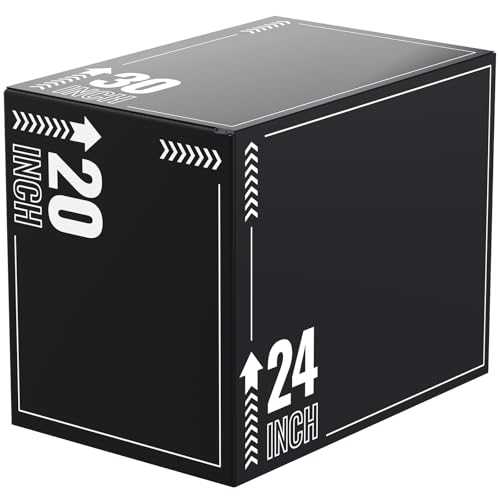
This papababe 3-in-1 plyometric box measures 20 x 24 x 30 inches and rotates to provide a vertical jump height range of 20, 24, or 30 inches. The design emphasizes a balance of durability and comfort, featuring heavy-duty foam that delivers strong shock absorption for repeated jumps. With a 400 lb maximum load capacity, it accommodates a wide range of athletes and workouts beyond box jumps, including squats and step-ups.
The anti-slip and sweat-proof surface uses a rugged 1000D Oxford weave, offering water resistance and a durable grip. The result is a box that withstands tough sessions while reducing slipping risk. This versatility makes it a solid choice for home gyms seeking a single, high-capacity platform for progressive plyometric training across multiple height settings.
id=”product-olxis”>OLIXIS 3-in-1 Plyometric Jump Box

OLIXIS offers a 3-in-1 design with three adjustable heights—16, 20, and 24 inches—and a lightweight 10-pound frame. Its simple rotation mechanism lets athletes switch heights mid-workout, making it easy to tailor challenges as endurance and power improve. The non-slip surface enhances traction during dynamic moves, helping maintain proper form and reduce the risk of slips during jumps and step-ups.
Ideal for home gyms with limited space, this box balances portability with stability. The cushioned, non-slip construction supports safe high-intensity training for athletes at various levels, from beginners focusing on learning proper landing mechanics to more advanced users seeking tougher plyometric stimulus within a compact footprint.
id=”product-papababe-small”>papababe 3-in-1 Plyometric Box Small

The compact papababe 3-in-1 plyometric box measures 12 x 14 x 16 inches and provides three height options suitable for beginners and athletes working on form. It uses heavy-density foam for cushioning, delivering strong shock absorption to protect joints during high-impact movements. The anti-slip, sweat-proof surface helps maintain grip during box jumps and other plyometric exercises, enabling safe, confident training in smaller spaces.
With a smaller footprint, this box is a practical option for users new to box jumps or those who want a dedicated progression tool for fundamental plyometric work. Its durable foam core and secure surface support consistent training while fitting into compact home gym layouts.
id=”product-handbode”>HANDBODE Foam Plyo Box

The HANDBODE foam plyo box offers a 3-in-1 adjustable height range of 12, 14, and 16 inches. It weighs about 13 pounds, making it easy to move and rearrange in a home gym. The high-density foam construction provides soft, safe landings while still supporting intense plyometric sessions. Its textured, non-slip surface helps athletes maintain stable footing during jumps and step-ups, reducing the risk of slips and shin injuries.
Designed for HIIT and strength training, this box balances portability with durability. Its foam core cushions impact and is suitable for daily use by a wide range of athletes, from youth to adults, while maintaining a compact profile that fits smaller training spaces.
Buying Guide
Choosing the right plyometric box depends on space, training goals, and safety priorities. Below are key considerations to help compare options and select a model that aligns with your program.
- Height range and progression: Look for boxes with adjustable heights or multiple size options (for example 12/14/16 inches up to 20/24/30 inches). A 3-in-1 design supports gradual progression as jump height improves.
- Construction and material: Foam-filled boxes soften landings and reduce shin scrapes, while wooden or composite boxes offer durability and stability. Foam options are typically lighter and gentler on joints; wooden boxes tend to be more durable but can be harder on impact if not padded.
- Surface and grip: A non-slip or sweat-proof surface helps maintain form during high-intensity sets. Anti-slip textures are especially important for dynamic moves like box jumps and lateral hops.
- Weight capacity: Ensure the box can support your training loads. Higher capacities (e.g., 180–400 lbs) provide room for lifting and plyometric work without risk of collapse or deformation.
- Portability and space: If space is limited, prioritize lightweight, easy-to-move options with a compact footprint. Rotating or 3-in-1 designs save space by eliminating the need for multiple boxes.
- Durability and maintenance: Foam boxes require inspection for wear over time, while wooden boxes may need surface care. Consider how easy it is to clean and maintain the surface between workouts.
- Versatility: A 3-in-1 unit supports a broader range of exercises beyond box jumps—step-ups, incline push-ups, and strength drills—making it a better long-term investment for a home gym.
- Safety basics: Maintain a clear training area, wear supportive footwear, and practice proper landing mechanics. Start with lower heights to learn form before increasing height or speed.
Overall, the best choice depends on your current fitness level, available space, and how you plan to use the box. For beginners or spaces with limited room, a foam 3-in-1 model that offers 12–16 inch heights provides a safe, scalable start. For athletes pursuing greater vertical height and more intense training, a larger 3-in-1 option with 20–30 inch heights may be more appropriate. Regardless of model, prioritize safety, progressive intensity, and consistent training to maximize vertical jump improvements.