Finding the right pull-up assist bands can help beginners build strength and enable progressive training. The selections below prioritize durability, adjustable resistance, and comfort for home gyms and professional use. Each option supports multiple muscle groups and offers scalable assistance to help you progress toward unassisted pull-ups. The list includes sets with adjustable bands, foot rests, and durable materials designed to withstand regular workouts. Use the summary table to compare capabilities at a glance and then dive into detailed product sections to understand how each choice fits your routine.
| Product | Brand | Resistance Range (lbs) | Notable Feature |
|---|---|---|---|
| Innstar Pull Up Assistance Bands Set | INNSTAR | 165 (adjustable across bands) | Sturdy steel buckles and protective cloth covering |
| HPYGN Pull Up Assist Bands | HPYGN | Multiple bands, adjustable length | Fabric feet/knee rest and versatile accessories |
| Ayombo Pull Up Assistance Bands | Ayombo | 75–300 (four bands) | Long 81-inch bands for varied workouts |
| HOXWC Pull Up Assistance Bands | HOXWC | 75–225 (three bands) | Double footrest for stability and safety |
| Lifeline Pull Up Revolution System | Lifeline | Not a standard band; system-based assist | Progressive, full-motion assistance |
Innstar Pull Up Assistance Bands Set

Innstar’s three-band set targets a total-body pull-up routine with emphasis on safety and longevity. The design centers on steel buckles that provide a rock-solid hold and cloth protection to preserve latex bands and shield skin during intense sessions. This arrangement supports diverse movements—from pull-ups and chin-ups to rows and presses—making it a versatile addition to any workout space. The progressive setup allows users to begin with all three bands and gradually reduce assistance as strength improves, enabling a systematic training progression from assisted reps to full unassisted pull-ups.
The three-band configuration accommodates beginners and seasoned exercisers alike, with clear build quality designed to resist frequent use. The package lends itself to a broad range of heights and body types through adjustable tension, which helps target arms, shoulders, back, chest, and core. For workouts focused on upper-body strength, climbers and power athletes alike can benefit from the consistent, repeatable resistance these bands provide. Safety features and durability considerations are integrated into the product, emphasizing a reliable, long-term training tool for home gyms or small studios.
HPYGN Pull Up Assist Bands Set
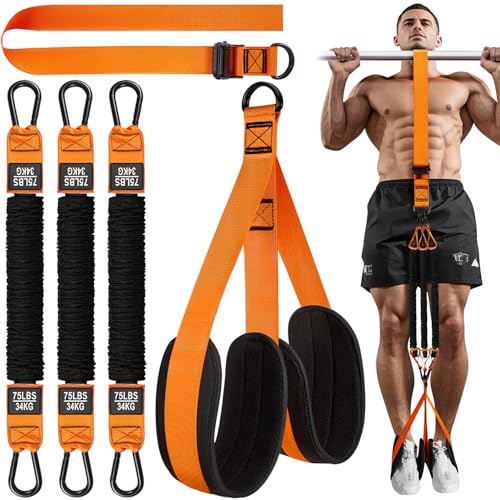
HPYGN’s set centers on three elastic bands paired with adjustable length for a customizable fit. This configuration supports both beginners and experienced athletes who want to dial in a specific level of assist as they work toward a full pull-up. The kit emphasizes gradual strength development by starting with greater assistance and progressively reducing it as capability improves. The inclusion of adjustable straps and sponge-pad accessories enhances comfort and reduces hand and arm fatigue during longer sessions, supporting sustained training blocks across various muscle groups.
The kit is designed to work with most standard pull-up bars, enabling quick height adjustments to align with your body and exercise style. The versatility of the bands allows you to perform a wide range of movements beyond traditional pull-ups, including rows, face pulls, and leg-assisted movements. This makes the HPYGN set suitable for mixed routines that build upper-body strength and core stability in tandem. Durability and a focus on user comfort are central to the design, helping it endure regular workouts in busy home gyms or commercial spaces.
Ayombo Pull Up Assistance Bands
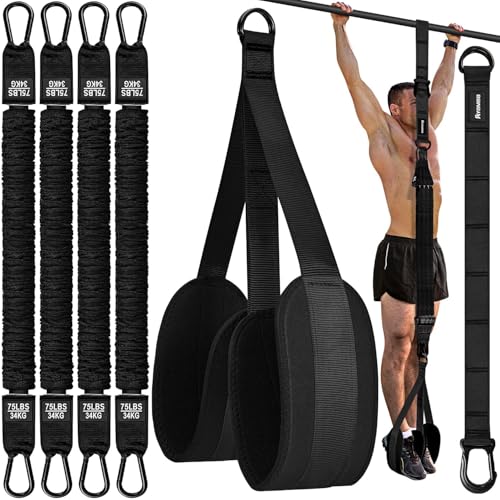
Ayombo offers a four-band system providing a broad resistance spectrum—from lighter to heavy—catering to both newcomers and seasoned athletes. With four 75-pound bands spanning a total range up to about 300 pounds, this setup supports scalable progression as strength increases. The 81-inch length provides ample reach for various pull-up bar heights and user heights, allowing a comfortable setup in different gym environments. The bands are manufactured from high-grade natural rubber, emphasizing durability and consistent tension through multiple training cycles, making them a robust choice for home gyms and studios alike.
Beyond pull-ups, Ayombo bands enable a wide array of upper-body and core movements, including rows, chest presses, and leg-assisted exercises. This versatility makes the kit a practical all-in-one solution for routines focused on back, shoulder, chest, arm, and abdominal development. The combination of multiple resistance levels and long length makes it easier to tailor workouts to individual strength profiles and to adjust the pace of progress across training cycles.
HOXWC Pull Up Assistance Bands

HOXWC provides a three-band set with a combined resistance range designed for progressive loading during pull-up practice. Each band offers a distinct tension level, enabling users to start with heavier assistance and step down as strength improves. A standout feature is the comfortable double footrest, which enhances stability and reduces the risk of improper form during early reps. This emphasis on safety and form makes HOXWC well-suited for beginners who are building confidence and technique as they work toward full, unassisted pull-ups.
The three-band arrangement supports a broad spectrum of workouts beyond pull-ups, including rows, leg raises, and assisted push exercises. The durable construction and attention to user comfort help ensure longevity in high-frequency training environments. Whether used at home, in a fitness studio, or as part of a small gym, HOXWC’s design prioritizes reliable resistance, steady progression, and practical versatility for multi-movement upper-body routines.
Lifeline Pull Up Revolution System

The Lifeline system takes a different approach from standard bands by offering a dedicated pull-up revolution system designed to provide assisted reps throughout the entire range of motion. The design supports progressive overload by enabling users to perform more quality repetitions with controlled assistance as they improve form and strength. This approach is particularly valuable for those who want a consistent motion pattern without abrupt changes in resistance, ensuring safer, higher-quality sets that target arms, shoulders, and chest.
With Lifeline, users can track progression by counting reps and observing form under consistent assistance. The system is especially useful for beginners learning the mechanics of the pull-up while also serving as a reliable training aid for athletes focusing on endurance and technique. Its unique construct supports a broad suite of upper-body movements, enabling a well-rounded program that emphasizes quality over quantity and gradual, structured gains over time.
Buying Guide: Key Purchase Considerations And Comparisons
Choosing the right pull-up assist setup depends on your goals, space, and training style. Here are critical factors to weigh as you compare options:
- Resistance Range And Progression: Look for a system that offers a broad range of resistance, ideally with multiple bands or adjustable tension. A gradual progression path helps beginners move from assisted reps to unassisted pull-ups without overstraining joints.
- Durability, Materials, And Safety: High-quality natural latex bands, reinforced stitching, and sturdy buckles are essential. Safety features such as skin protection, non-slip handles, and secure anchor points reduce the risk of slips during intense sets.
- Comfort Features: Foot rests, knee cushions, and padding help maintain proper form and reduce fatigue during longer sessions. Comfort contributes to consistency in training and safer execution of movements.
- Compatibility And Setup: Consider whether the system works with your door-mounted pull-up bar, ceiling anchor, or free-standing station. Some kits include additional accessories like straps, sleeves, or travel pouches for portability.
- Versatility Beyond Pull-Ups: A versatile kit supports rows, presses, leg raises, and mobility work, enabling a broader upper-body routine. This can maximize the value of a single training tool in a home gym.
- Size, Length, And Fit: Longer bands and adjustable straps accommodate different heights and arm lengths. Ensure the setup allows comfortable positioning to avoid excessive strain on shoulders or back while performing reps.
- Maintenance And Longevity: Inspect bands regularly for signs of wear, tears, or overstretching. Proper care, such as cleaning and storing away from direct sunlight, helps extend the life of elastic components.
Compared to a specialized system like Lifeline, band sets (Innstar, HPYGN, Ayombo, HOXWC) offer DIY flexibility and portability, making them ideal for home use and travel. Systems with built-in footrests and padded surfaces may emphasize safety and form for beginners, while higher-tidelity bands with broad resistance ranges serve advanced trainees seeking deeper progression. When evaluating options, align your choice with training goals (strength vs. endurance), available space, and how quickly you want to progress toward unassisted movements.
For most users, a three-band or four-band configuration with adjustable length represents a solid starting point. This setup provides enough variety to perform multiple exercises while enabling a clear progression curve. If your routines frequently incorporate leg or core engagement beyond pull-ups, consider a kit that includes accessory straps, cushions, and a travel pouch for easy transport to a gym or park workout.
In summary, select a system that balances resistance range, comfort, durability, and versatility. A well-chosen pull-up assist tool can support consistent training, reduce the risk of injury, and help you reach unassisted pull-ups more efficiently within a structured progression plan.