Finding a snowboard setup that fits bigger feet can be a challenge, but the right combination of boots, insoles, and supportive accessories makes a big difference on the slopes. This guide highlights five products designed to improve comfort, stability, and warmth for riders with larger feet. From high-arch insoles to sturdy snowboard boots and specialized plantar fasciitis inserts, these picks address fit, arch support, and overall day-long comfort. Use the buying guide at the end to compare options and tailor a setup to your needs.
| Product | Brand | Type | Notable Benefit |
|---|---|---|---|
| Burton Moto BOA Snowboard Boots | Burton | Boot | Secure Boa fit with warm interior and instant comfort |
| System APX Men’s Snowboard Boots | System | Boot | Flexible lace options for customizable fit |
| SIDAS Winter 3Feet Insoles | Sidas | Insole | High-arch support with insulated cushioning |
| Shred Soles Snowboard Boot Insoles | Shred Soles | Insole | Advanced arch support and impact dampening |
| SARVAR Heavy-Duty Insoles | SARVAR | Insole | Anti-fatigue support for big and tall feet |
Below are the five products chosen for big-foot comfort, followed by practical buying guidance to help you choose the right combination of boots and insoles for your needs.
Burton Moto BOA Snowboard Boots

The Burton Moto BOA Snowboard Boots are built for a snug, secure fit with a focus on warmth and immediate comfort. They feature a durable polyurethane backstay and a 1:1 soft flex PowerUp tongue that helps the tongue stay in place while delivering a responsive feel. The Total Comfort Construction aims to reduce break-in time and offer a comfortable ride right out of the box. A snow-proof internal gusset seals the lower zone of the boot, helping keep feet dry and warm in cold conditions.
The Single-Zone BOA Fit System provides quick, precise adjustment across the forefoot and ankle for a secure, customizable fit. The boot’s interior uses “man fur” for extra warmth and a welcoming entry, which is ideal for riders who spend long hours on the mountain. While the product doesn’t specify width, the Boa system often helps accommodate slightly wider feet by enabling tighter control without crushing the midfoot. Overall, these boots are suitable for riders seeking reliable warmth and a rapid-fit mechanism for frequent pit stops on the chairlift.
Fit and performance notes: a sturdy shell, good mid-range flex, and quick adjustment make the Moto BOA a solid choice for riders who value convenience and dependable warmth. For big-foot comfort, pair these with supportive insoles to maximize arch support and underfoot stability during aggressive turning or long days on the mountain.
System APX Snowboard Boots
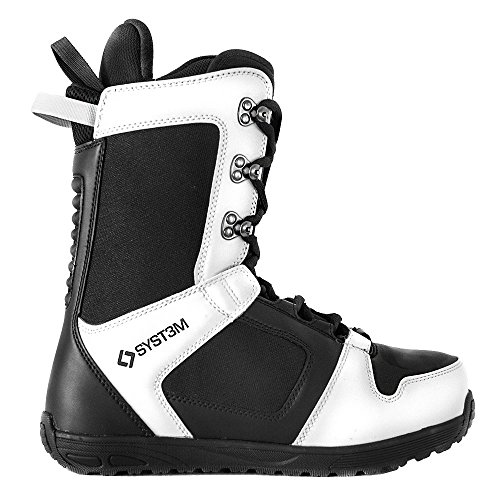
The System APX boots are offered in multiple lacing configurations, including traditional lace and Pro Twist. The traditional lace version provides a familiar fit with separate tightening in key zones, assisted by smoothed metal hooks to prevent lace abrasion and maintain tension throughout the day. The Pro Twist version uses a twist dial and reinforced cable for a bomb-proof fit that stays tight as you ride. This flexibility is helpful for riders with larger feet seeking precise control and a secure seal around the ankle and midfoot.
Designed for durability and versatility, the APX boots balance stiffness and comfort. The boot’s construction allows for ample midfoot space and adjustable tension, which can be critical for big-foot riders who need room without sacrificing control. If you wear thick socks or require extra arch support, consider an aftermarket insole that complements the boot’s shape while preserving the fit. These boots suit riders who want reliable performance with customizable lacing options for all-day comfort on variable terrain.
Tips for big feet: ensure your insole height doesn’t crowd the toe box, and test both lace systems to determine which offers the most secure heel hold without pinching. A well-fitted boot combined with a supportive insole can improve balance and reduce fatigue on longer runs.
SIDAS Winter 3Feet Insoles

These insoles focus on optimized foot stability and comfort, recognizing that feet differ in shape, movement, and pressure. The SIDAS Winter 3Feet insoles feature an enhanced EVA pad for cushioning and gel-like support, improving pressure distribution across the foot. A notable feature is the aluminum film at the forefoot, designed to provide insulation against cold and the elements—an advantage for big-foot riders who spend longer periods outdoors in winter conditions.
The insoles come with support for high arches and a design that accommodates a range of foot shapes, particularly larger sizes. This makes them a practical option for riders with wide feet or higher arches seeking improved underfoot support without compromising boot volume. The combination of lightweight materials and targeted cushioning helps reduce fatigue during extended sessions, contributing to better control and stability on challenging terrain.
Using the SIDAS insoles with a compatible boot enhances arch management and pressure distribution, which is especially relevant for big-foot riders who might experience uneven load. If you’re constantly battling cold forefoot discomfort or need extra stability in the midfoot, these insoles can be a valuable addition to your snowboard setup.
Shred Soles Snowboard Boot Insoles

Shred Soles focuses on performance-enhancing insoles designed for maximum comfort and control inside snowboard boots. The product features cloud-like underfoot cushioning for long wear, plus high-density gel in the heel area to absorb impact and reduce chatter in the forefoot. The DynArch2 arch support is engineered specifically for snowboarding to maximize arch support and minimize strain, which is especially helpful for riders with bigger feet who may require more substantial arch management.
The combination of impact dampening, targeted arch support, and a snug boot fit can help reduce fatigue and improve balance on uneven terrain. These insoles are designed to stay in place inside the boot, contributing to consistent support throughout the day. For big-foot riders, the enhanced heel cushioning and midfoot support can translate into steadier landings and more precise edge control, enabling longer sessions with less discomfort.
Pair these insoles with a boot that offers ample volume, then customize with the right combination of socks and moisture-management layers. The result is a more comfortable ride with improved stability, particularly on hard-packed snow or variable park terrain.
SARVAR Heavy-Duty Plantar Fasciitis Insoles

SARVAR’s Heavy-Duty Insoles are designed for big and tall feet, offering anti-fatigue technology to reduce pain and provide long-lasting comfort. The insoles are positioned as a versatile solution for men and women who require enhanced support across various shoe types, including work boots and snowboarding footwear. The product explicitly notes applicability to plantar fasciitis, high arches, pronation, and related issues, making them a practical option for riders who experience foot fatigue after long days on the mountain.
Size guidance emphasizes checking fit details before purchasing, as the insoles are designed for larger feet and heavy use. The insoles are described as suitable for a wide range of activities, from walking and standing to light snowboarding-related movement, offering a stable base for big feet that need extra support. For big-foot riders, these insoles can provide an extra layer of stability and reduction in fatigue when paired with properly sized boots and suitable socks.
When selecting insoles for big feet, consider arch height, heel cup depth, and overall thickness to maintain toe clearance inside boots. Combine these insoles with boots that provide adequate interior volume, and you’ll likely experience improved comfort and support during long sessions on the mountain.
Buying Guide: Key Considerations For Big Feet On The Slopes
Choosing snowboard gear for bigger feet requires balancing fit, support, and warmth. Here are essential considerations to help you decide between boots, insoles, and hybrid options:
- Foot Width And Volume: Look for boots labeled with a wider fit or “volume” that accommodates larger feet without pinching. Consider trying traditional lace or Boa systems, which can adapt to foot shape while maintaining secure heel hold.
- Boot Flex And Control: A softer flex can feel more comfortable for beginners or those with wider feet, while a stiffer boot may offer better edge control for advanced riders. The best choice depends on your riding style and terrain.
- Lacing Systems: Traditional laces, Boa, or Pro Twist offer different grip and customization. For big feet, a system that allows easy adjustment during the day helps you maintain consistent fit from morning to last run.
- Arch Support And Insoles: Insoles designed for high arches or plantar fasciitis can reduce fatigue and improve stability. Ensure insoles fit compatibly with your boot’s interior height and toe box space to avoid crowding.
- Insulation And Warmth: Cold forefoot and toe discomfort can ruin a day on the mountain. Insoles with aluminum forefoot insulation or thermal layers can help maintain warmth without adding excessive bulk inside the boot.
- Durability And Materials: Opt for boots and insoles built to withstand extended use and moisture exposure. Durable backstays, gussets, and cushioned midsoles contribute to longer-lasting comfort.
- Size Availability: Check size charts for EU/US conversions and note any limitations in large sizes. If you’re between sizes, consider half sizes or add an aftermarket insole to achieve a better fit.
- Compatibility With Other Gear: Ensure insoles don’t interfere with boot lacing mechanisms or boot volume. For custom orthotics, verify there is enough space without compressing the foot or ruining fit.
Practical setup tips: break in new boots gradually, wear socks designed for winter sports, and test setup on varied terrain. Start with a moderate flex boot and a supportive insole, then adjust the fit to your comfort level. If you experience persistent discomfort, consider consulting a podiatrist or a specialty bootfitter who can tailor a solution to your foot shape and riding style.