Traveling to games and tournaments requires gear that protects, organizes, and moves with you. A dedicated softball catcher bag should hold masks, chest protectors, leg guards, gloves, and cleats, while staying breathable and easy to maneuver. The right bag minimizes gear losses and speeds up transitions between practices and games. The bags below span wheeled duffels, backpacks, and rolling totes to fit different travel needs and seasons, offering durability, smart organization, and comfort on the road.
Below you’ll find five top-rated options that balance durability, organization, and portability. A quick summary table below the product sections highlights each bag at a glance, followed by in-depth product sections with features drawn from their specifications to help you compare at a glance.
| Product | Brand | Key Feature | Capacity Hint |
|---|---|---|---|
| Easton Jen Schro Wheeled Catcher’s Bag | Easton | Rigid bottom and back panels; telescopic handle; expandable side sleeves; vented compartments | Full kit plus accessories |
| Easton Jen Schro Catcher’s Backpack | Easton | Vented main compartment; interior shelf; vented cleat compartment | Gear with separate cleats |
| PowerNet Optimus Catcher’s Gear Bag | PowerNet | Large main pocket; internal pockets and hooks; adjustable shelves; dual water bottle holders | Comprehensive kit |
| FOKDUVB Catchers Gear Bag | FOKDUVB | 13.8″ x 9.4″ x 21.7″; quick shoe access; sleeves for up to 4 bats; mitts/front bungee | High capacity on a compact frame |
| Rawlings COVERT Duffle Bag | Rawlings | Two bat sleeves; mesh valuables pocket; ventilated shoe compartment; moisture protection | Versatile and durable |
Easton Jen Schro Wheeled Catcher’s Bag

This wheeled bag combines a rigid bottom and back panels with a telescopic handle to protect gear during travel. The interior features two expandable side sleeves for leg guards and three mesh vented compartments for airflow, along with two internal detachable shelves for organizing equipment by type or by game. The rigid construction helps maintain shape even when the bag is fully loaded, reducing stress on zippers and seams during transit.
External storage includes two fully lined bat sleeves with an external strap and quick-release buckle for gloves or helmet, plus a mesh pocket for batting gloves and a small removable bag for personal items. A felt-lined personal pocket provides a discreet space for keys or a wallet. Overall, the design emphasizes easy access, stability on wheels, and orderly separation of gear during busy travel days.
Easton Jen Schro Catcher’s Backpack
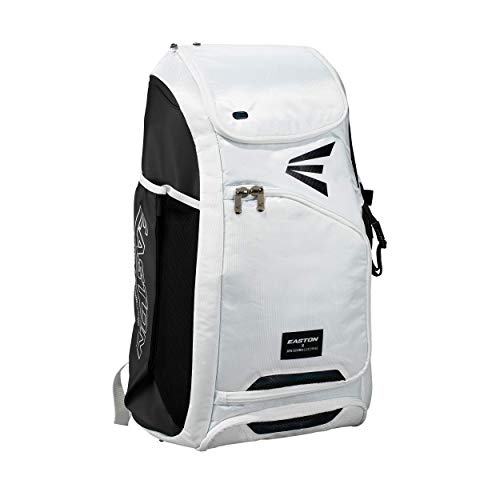
Designed in collaboration with Jen Schro, this backpack is tailored for fastpitch catchers. It features a vented main compartment and an interior shelf to keep gear organized, separating helmet, chest protector, and gloves from other items. The ventilation helps reduce moisture buildup and odor while keeping your kit accessible and easy to load for practice or game days.
A vented cleat compartment isolates cleats from the rest of the gear, aiding air circulation and odor control. The bag is designed to fit catcher’s gear while remaining manageable as a backpack for travel to practices and tournaments. With dedicated pockets and ventilation, it aims to streamline gear transport without compromising capacity or accessibility.
PowerNet Optimus Catcher’s Gear Bag

The Optimus Bag emphasizes storage capacity with a large main pocket capable of holding gloves, helmet, and other gear, plus two internal mesh pockets, three accessory hangers, adjustable shelves, and two water bottle holders. This design supports a full kit and keeps items accessible during travel. The spacious main compartment accommodates bulky items such as chest protectors and leg guards, while keeping smaller pieces organized for quick access at the field.
Five hidden hanging hooks let you dry and access gear when on fences at the field, and pocket organizers include felt-lined pockets and ventilated areas to help items stay organized and protected. The combination of hooks, shelves, and dedicated pockets makes it easier to level gear before a game and to move efficiently between fields and concession areas.
FOKDUVB Catchers Gear Bag

This bag is built for full gear capacity, measuring 13.8″(L) x 9.4″(W) x 21.7″(H) and weighing 2.2 pounds. It offers a dedicated shoe pocket with ventilation above the main compartment to avoid obstruction from other gear, and specialized sleeves hold up to four bats. The main compartment is roomy for helmets, chest protectors, and other gear, while a front bungee cord provides quick access for mitts and caps. The design prioritizes easy organization and rapid access during both practices and games.
A front bungee cord keeps mitts and caps within reach, and the overall layout supports straightforward packing. The bag emphasizes accessibility and capacity in a lightweight frame, catering to catchers who need a compact yet capable carrier for multiple pieces of equipment.
Rawlings COVERT Duffle Bag

The COVERT Duffle focuses on versatility with two long over-the-shoulder straps for easy carry, a large interior pocket, two bat sleeves, a mesh valuables pocket, and a breathable shoe compartment on one end. The moisture-protective design benefits from a durable vinyl bottom and 600D polyester main body, helping resist wear from field trips and travel. The layout supports quick packing and simple access to essentials on game day.
The bag balances capacity and portability, offering organized space for catching gear alongside everyday items. The combination of bat sleeves, a dedicated valuables pocket, and a ventilated shoe area makes it a flexible option for players who need a dependable bag that remains comfortable on long trips.
Buying Guide
When selecting a softball catcher bag, consider how your gear fits, how you travel, and how you prefer to organize items. The right bag should protect gear, simplify transport, and reduce setup time between innings and practices.
- Capacity and fit: Assess how many bats, helmets, chest protectors, leg guards, gloves, and cleats you carry. Compare bag dimensions to ensure everything fits without overpacking, which can compromise balance and handling.
- Portability: Decide between wheels, backpack straps, or a tote design. Wheels reduce back strain during airport transfers, while backpacks keep hands free on crowded sidewalks and bleachers. Some models combine both approaches for maximum versatility.
- Ventilation and moisture control: Look for vented compartments or breathable panels to minimize moisture buildup and odors. Ventilation is especially important after practice or rain-soaked games.
- Organization: Check for dedicated shoe compartments, bat sleeves, helmet pockets, and shelves or dividers. A well-organized bag saves time by keeping items accessible and clearly separated by category or game.
- Durability and materials: Durable fabrics (like 600D polyester) with reinforced stitching and sturdy zippers extend the bag’s life. A protective bottom or reinforced panels can prevent wear from frequent loading and unloading.
- Accessibility and layout: Consider how gear is loaded and retrieved. Top-loaded designs are quick for those who rush between innings, while side or front access can help when space is tight in dugouts or buses.
- Customization and warranty: Some bags offer personalization panels or patches, which can help with team branding. A warranty provides peace of mind for gear investments you rely on every week.
In summary, choose a bag whose organization aligns with your gear list, whose portability matches your travel routine, and whose materials and construction fit your durability expectations. A bag that keeps equipment dry, easy to access, and well organized can streamline practices and game-day routines, helping players focus on performance rather than logistics.