Choosing a reliable water bottle with a built-in filter is essential for international travel. Filtration power, capacity, and durability vary across models, from rugged outdoor bottles to everyday commuter options. This guide highlights five highly capable bottles that balance portability, filtration performance, and cost, helping you stay hydrated and safe—from crowded airports to remote taps. The quick-reference table below provides a snapshot of each bottle’s key specs, so you can compare at a glance and choose the right fit for your next trip.
| Product | Brand | Capacity (oz) | Notable Benefit |
|---|---|---|---|
| LifeStraw Go Series Insulated Bottle | LifeStraw | 24 | Carbon filter improves taste; high-level pathogen filtration |
| Water-to-Go Travel Filter Bottle | WATER TO GO | 24 | Filters viruses; broad protection for travel scenarios |
| Brita Hard-Sided Premium Bottle | Brita | 26 | Chlorine taste and odor reduction; affordable everyday option |
| SurviMate 5-Stage Filtration Bottle | SurviMate | Varies | 0.01 μm UF membrane; added compass for outdoors |
| GRAYL UltraPress Water Purifier | GRAYL | 16.9 | OnePress purification; removes viruses and bacteria |
The following five bottles were selected for international travel due to a combination of filtration strength, portability, and proven performance in the field. Each entry includes a concise look at what makes it suitable for travel—from busy airports to far-flung taps—so you can assess which bottle best fits your itinerary and risk tolerance.
LifeStraw Go Series Insulated Bottle

The LifeStraw Go Series is built as a reliable travel companion with a stainless steel, BPA-free bottle that holds 24 ounces. It’s designed for filling up in airports, hotel sinks in unfamiliar cities, or any standard tap you encounter on the go. The bottle’s setup pairs a carbon pre-filter with a membrane microfilter that protects against a broad spectrum of contaminants while improving taste.
Filtration is a standout feature: the carbon filter reduces chlorine, odors, and organic chemicals, delivering better-tasting water. The microfilter targets bacteria (including E. coli and Salmonella), parasites (including Giardia and Cryptosporidium), and even microplastics, along with particulates like sand and dirt. This combination makes it a practical option for travelers who want a single device capable of handling varied tap conditions, from urban centers to rural stops.
In daily use, the LifeStraw Go is robust and straightforward. It’s designed to be filled from public taps, hotel sinks, and other water sources encountered during travel. With a balanced weight and a comfortable grip, it works well for travelers who want a dependable, all-purpose bottle that doubles as a portable purifier for diverse environments.
Water-to-Go Travel Filter Bottle

The Water-to-Go bottle is designed for travelers who want a compact, travel-ready option with a strong filtration profile. With a 24-ounce capacity, it’s a practical size for day trips, city sightseeing, and airline layovers where access to clean water may be uncertain. The bottle’s standout claim is its ability to filter viruses in addition to bacteria and parasites, a feature cited in travel endorsements and reviews.
According to product notes, this bottle aims to protect health across a variety of settings—from hotel sinks to rural taps. By removing a broad spectrum of contaminants, including bacteria, parasites, heavy metals, microplastics, and PFAS, it reduces the risk of waterborne illness on international itineraries. The design emphasizes reliability and ease of use, important for travelers who want simple hydration without extra gear.
For travelers who prioritize virus filtration and a straightforward solution, Water-to-Go presents a compelling balance between portability and protection. It’s especially appealing to those who encounter mixed water sources and want a single device that can handle both urban and remote environments with minimal fuss.
Brita Hard-Sided Premium Bottle

The Brita Hard-Sided Premium Filtering Bottle is a robust option for travelers who want a simple, tested filtration system without overcomplicating hydration routines. This BPA-free bottle holds 26 ounces and uses an activated carbon block filter designed to cut chlorine taste and odor while reducing particulates in drinking water. It’s important to note that Brita’s bottle is a filter, not a purifier, so it does not remove all contaminants like certain microbes.
Maintenance is straightforward: rotate filters periodically to maintain taste and filtration effectiveness. The carbon filter tackles taste and odor issues that commonly show up in municipally treated or older infrastructure taps. By replacing a single filter, travelers can extend the bottle’s life across multiple trips while reducing the need for single-use plastic bottles. This makes Brita a budget-friendly, eco-conscious option for city-based travel and routine daily use.
For travelers prioritizing cost per ounce and easy replacement, Brita’s bottle provides dependable filtration for taste improvement and modest contaminant reduction, particularly suited to travelers who expect to drink a lot of water from various city sources during a trip.
SurviMate 5-Stage Filtration Bottle

The SurviMate bottle emphasizes advanced filtration with a five-stage system. It employs a coarse pre-filter, a 0.01-micron hollow fiber UF membrane, a sediment PP membrane, purification beads, and activated carbon fiber to reduce chlorine, odors, heavy metals, sediments, and other impurities. The result is stronger filtration than many basic bottles, particularly effective for travelers who encounter varied water sources and want more thorough purification on the go.
A notable feature is a built-in compass on the top, which can be helpful during outdoor exploration or camping scenarios. The smaller 0.01-micron pore size enhances filtration precision, delivering cleaner, safer drinking water even when water quality is uncertain. This bottle is well-suited for backpackers, hikers, and travelers who plan outdoor activities alongside urban travel and want a more rugged filtration solution.
GRAYL UltraPress Purifier Bottle
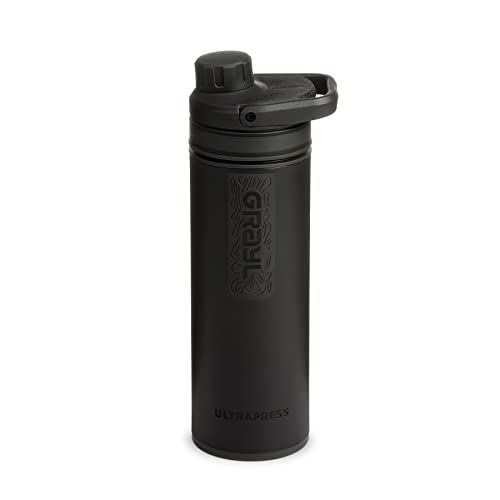
The GrayL UltraPress is a compact purifier designed for global travel and outdoor adventures. At 16.9 ounces, it’s lighter than many alternative purification bottles while delivering potent purification power. The OnePress Global Protection system removes 99.9% of viruses (such as rotavirus and norovirus) and 99.9999% of bacteria, plus 99.9% of protozoan cysts, and it filters particulates while adsorbing VOCs, PFAS, chemicals, pesticides, and metals. This makes it a strong choice for travelers concerned about a wide array of contaminants in diverse water sources.
GrayL bottles emphasize speed and ease: rinse, press, and drink in one simple motion. Their purification process is designed to work on-the-fly, whether you’re navigating transit hubs or sharing taps in remote regions. While the UltraPress may demand a higher upfront price than some basic filters, its purification performance and compact form factor make it a compelling option for travelers who prioritize maximum protection with minimal maintenance.
Buying Guide
Filtration Technology And What It Protects Against
Water bottles with filters use several technologies, including activated carbon, microfiltration, ultrafiltration, and integrative purification systems. Activated carbon improves taste and odor by removing chlorine and organic compounds. Microfiltration and ultrafiltration membranes remove bacteria, parasites, and microplastics to varying degrees. Some bottles add virus filtration or in-activating media (as with certain purifier designs). For international travel, consider whether you’ll be dealing with municipal taps, rural wells, or hotel water systems, and choose a system that matches the expected contaminants in those environments.
Virus, Bacteria, and Parasite Removal
Not all bottle filters remove viruses. If virus filtration is a priority, look for bottles and purifier designs that explicitly state virus reduction. Models like Water-to-Go emphasize virus filtration, while purifier bottles like GrayL provide broad protection against viruses and bacteria. If your itinerary includes countries with uncertain water safety, weighing virus removal capabilities is a sensible step in your decision process.
Capacity, Weight, And Portability
Travelers should balance capacity with weight. Larger bottles offer more hydration between fills but add bulk in carry-ons or backpacks. Smaller options enhance portability but require more frequent refills, which can be inconvenient on long flights or during excursions. If you’re trekking or staying in hostels with limited access to clean water, a higher-capacity bottle can be advantageous. For urban travel with easy water access, a lighter bottle may suffice.
Durability And Build Quality
Durability matters when navigating crowded airports and rough travel days. Stainless steel bottles tend to be sturdier and temperature-retaining, but they may be heavier. BPA-free plastics offer lightness and cost benefits but may not insulate as well. Consider climate and use cases: a rugged outdoor tour or a backpacking trip may favor a durable, insulated bottle, while city travel might prioritize lightweight design for day-to-day hydration.
Filter Lifespan And Replacement Costs
Filters require replacement over time, and costs vary by brand and filter type. Some bottles have replaceable carbon cartridges, others use multi-stage cartridges. When budgeting, factor in the price of replacement filters and their expected lifespan in gallons or liters. A filter that lasts longer between replacements can reduce long-term costs, but initial investment may be higher. Maintenance ease—how easy it is to replace the filter—also affects overall value.
Maintenance And Cleaning
Travel-friendly bottles should be easy to clean and dry. Some parts are dishwasher-safe, while others require hand washing. Look for designs with simple, well-sealed lids to minimize leaks during flights and transit. Proper drying between uses helps prevent mold and odors, especially in humid climates or during extended trips. A bottle with clear maintenance instructions will save time and ensure effective filtration over its lifespan.
Cost vs. Benefit For Your Travel Style
High-performance purifiers typically cost more upfront but may offer superior protection in uncertain water sources. If you frequently travel to places with variable water quality, investing in a purifier or a bottle with virus filtration can reduce health risks and the need to purchase bottled water. For budget-conscious travelers, a trusted filter with recyclable replacement cartridges can provide solid protection at a lower upfront cost. Align your choice with your itinerary, risk awareness, and willingness to maintain filters in transit.
Practical Scenarios And Recommendations
City-focused trips with reliable municipal water may benefit from carbon-filter bottles that improve taste and reduce chlorine. Rural or remote itineraries may require stronger filtration against bacteria, parasites, and viruses. For hikers and campers, features like a built-in compass, compact form, and rugged construction can improve navigation and resilience. If you value speed and simplicity, purifier bottles like GrayL deliver quick, robust protection with minimal steps. Ultimately, pick a bottle whose filtration level, capacity, and maintenance fit your travel pattern and comfort with water sources abroad.