Practicing tennis alone is easier with a portable ball machine that fits in a car trunk or gym bag. The following models combine compact design, battery-powered operation, and smart features to simulate real-match scenarios without steady court rentals. Each model below is suitable for players from beginner to intermediate levels, with varying capacities, speeds, and control options to fit different training needs.
| Product | Brand | Speed Range | Ball Capacity | Battery Life | Notes |
|---|---|---|---|---|---|
| PT-Smart App-Controlled Ball Machine | PUSUN | 12–75 mph | 100 balls | Up to 5 hours | App control, 11 modes, 20 landing points |
| Lobster Elite One Portable Launcher | Lobster Sports | 10–80 mph | 150 balls | Not specified | Horizontal sweep, spin control, 60° elevation |
| PT-MINI Pro Portable Tennis Ball Machine | PUSUN | 8–60 km/h (≈5–37 mph) | 65+ balls | 3–5 hours | APP control, compact for schools |
| Nisplay Portable Tennis Ball Machine | Nisplay | Up to 68 mph | 80+ balls | 4+ hours | Dual motor, portable, external battery |
| Spinshot Pro Tennis Ball Machine | SPINSHOT PLAYER | Not specified | Not specified | Not specified | Kob controls; easy to use; flexible power options |
PT-Smart App-Controlled Ball Machine

The PT-Smart Tennis Ball Machine from PUSUN provides an app-controlled experience with a broad speed range of 12–75 mph. It includes 11 training modes, supporting forehands, backhands, volleys, and horizontal swings to diversify solo practice. This versatility helps players structure workouts that target pattern recognition and shot selection, delivering a dynamic training session even without a partner.
With 20 landing points and a 100-ball capacity, the device can replicate varied rally patterns across the court, aiding in placement, footwork, and anticipation. A dedicated external lithium battery delivers up to five hours of continuous play, enabling longer sessions away from power outlets. The design emphasizes portability and user-friendly setup, making it suitable for indoor gyms, outdoor courts, and private courts alike.
Designed for portability, the PT-Smart balances lightweight construction with reliable performance, blending convenience with core training functionality. Its app-friendly interface and modular battery system align with beginner-to-intermediate players seeking structured, repeatable drills without frequent reloading.
Lobster Elite One Portable Tennis Ball Machine

The Lobster Elite One offers adjustable ball speeds from 10 to 80 mph and comprehensive spin control, enabling a wide range of practice scenarios from gentle feeds to fast topspin. This flexibility supports players refining strokes across the court, including pace, rhythm, and consistency.
Horizontal oscillation allows feeds from left, right, center, or random positions, enabling solo practice that mirrors real match movement and shot placement. The electronic elevation control supports lobs up to 60 degrees, helping players work on overheads and deep baseline returns. The unit remains lightweight and portable, and it holds 150 balls, reducing reload interruptions during long practice sessions.
In addition to speed and spin, the two-button remote provides quick, accessible operation, allowing players to adjust on the fly. Overall, the Elite One emphasizes a balance of power, control, and mobility for home courts, clubs, and coaching environments.
PT-MINI Pro Portable Tennis Ball Machine

The PT-MINI Pro is a compact indoor server with APP control and a 65-ball capacity. Speed ranges from 8 to 60 km/h (approximately 5–37 mph), and the serving distance reaches about 12 meters, making it suitable for small court spaces and classroom setups. This model supports topspin and backspin, along with vertical adjustment from 25 to 60 degrees, enabling players to vary spin and trajectory in drills.
With a 3–5 hour battery life profile, the PT-MINI Pro provides enough session time for focused practice without frequent recharging. The 65-ball capacity keeps reloads manageable during longer workouts, while the portable form factor supports easy transport between home, school, and club facilities. The combination of app control and teaching-oriented features makes it appealing for schools and independent players alike.
Overall, the PT-MINI Pro emphasizes compact design and practical capabilities, offering essential drills and spin options in a lighter, more affordable package suitable for beginners and schools seeking efficient training tools.
Nisplay Portable Tennis Ball Machine

The Nisplay portable unit weighs 26 pounds and features a dual-motor system to produce top spin and backspin. It supports speeds up to 68 mph and offers an elevation range from 0 to 50 degrees. A 4+ hour run time is supported by an external lithium battery, which makes it practical for multi-session workouts without constant recharging.
Designed for easy transport, the Nisplay model includes oversized wheels and a folding handle, enabling smoother movement across different terrains and into vehicles. Its ball capacity sits at 80+ balls, striking a balance between bulk practice and reload frequency. The dual-motor configuration and mobility suit players seeking varied spin and height in a compact package.
In practice, this model suits players who want robust practice options in a portable form, with dependable endurance for extended solo sessions at home, in clinics, or on light outdoor courts.
Spinshot Pro Tennis Ball Machine
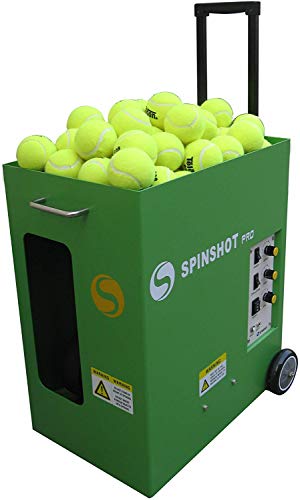
The Spinshot Pro is presented as a model focused on easy operation. It emphasizes knob-controlled settings for straightforward adjustments and is marketed as exceptionally user-friendly, including options that may appeal to younger players or beginners seeking simple controls. The model highlights flexible power options, allowing use with various power sources depending on setup.
Details on exact ball speed ranges or hopper capacity are not specified in the provided materials, but Spinshot Pro remains a compact option for households and clubs prioritizing simplicity and reliability. The emphasis on intuitive use and adaptable power makes it a viable choice for players seeking a low-friction practice partner without deep menus or complex programming.
As with any machine, prospective buyers should verify current specifications like speed range, hopper size, and battery compatibility to ensure alignment with training goals and venue limitations.
Buying Guide
When choosing a portable tennis ball machine, consider portability, power, ball capacity, speed range, and drill versatility. The right model depends on your space, training style, and whether you practice solo, with a partner, or in a school or club setting.
- Portability and weight: Lighter machines are easier to carry and store, but some high-capacity units are heavier. Balance weight with how often you’ll move the unit between locations.
- Power source and battery life: Decide between models with built-in batteries and external packs. Longer run times reduce interruptions but may add weight. Check recharge times and whether batteries are replaceable.
- Ball capacity: Higher capacities minimize reloads during long sessions. For frequent solo practice, a 100–150 ball hopper is convenient; for short sessions, 65–80 balls may suffice.
- Speed range and spin options: A broad speed range supports a wide variety of drills. Spin control and topspin/backspin options enable more realistic rally simulations.
- Oscillation and feed patterns: Horizontal oscillation and random feeds replicate match movement. Consider whether you want programmable landing points, fixed spots, or random patterns.
- Programmability and control interface: Apps and remotes add versatility but require compatibility with your devices. Look for models with clearly labeled drills and easy setup for beginners.
- Durability and maintenance: Review build quality, battery care, and hopper loading ease. A robust model reduces downtime and replacement costs over time.
- Venue suitability: Indoor courts, outdoor spaces, clubs, or schools may impact choice. Some models are better suited for classrooms or gym environments due to space constraints.
| Model | Best For | Speed Range | Ball Capacity | Portability |
|---|---|---|---|---|
| PT-Smart App-Controlled | All-around training with app control | 12–75 mph | 100 balls | High (portable) |
| Lobster Elite One | Power players needing wide range | 10–80 mph | 150 balls | Medium |
| PT-MINI Pro | Schools and compact spaces | ≈5–37 mph (8–60 km/h) | 65 balls | High (ultra-compact) |
| Nisplay | Balanced portable option | Up to 68 mph | 80+ balls | High (26 lb, easy transport) |
| Spinshot Pro | Simple-use model | Not specified | Not specified | Medium |