Anyone who camps on a budget still deserves warmth, comfort, and reliable performance from a sleeping bag. The following review highlights five affordable, down-filled options that balance warmth-to-weight, packability, and durability. From ultralight Naturehike models to budget-friendly Kelty and Coleman options, these bags cover three-season use and occasional winter nights. We focus on features like fill power, down amount, size options, and draft protection to help American campers compare value without sacrificing warmth. Use this guide to match a sleeping bag to your planned trips, season, and backpacking rhythm.
| Product | Brand | Key Feature | Comfort Range |
|---|---|---|---|
| Naturehike Navy 650 Fill Power Sleeping Bag | Naturehike | 650 fill power duck down; 295 g fill; CW295 medium / CWM400 large; 20 oz weight | Comfort ~42.8–51.8°F (6–11°C); Extreme ~32°F (0°C) |
| Naturehike Green 650 Fill Power Sleeping Bag | Naturehike | 650 fill power duck down; 295 g fill; CW295 medium / CWM400 large | Comfort ~12°C / 54°F; Extreme ~6°C / 42.8°F |
| Coleman North Rim 0°F Big & Tall | Coleman | 0°F rating; Big & Tall up to 6’2″; Thermolock draft tube | Comfort around 0°F; suitable for tall hikers |
| Kelty Cosmic 20 Degree Women’s | Kelty | 550 fill DriDown; trapezoidal baffles; large footbox; women’s cut | Comfort ~20°F |
| Kelty Mistral 550 Down Sleeping Bag | Kelty | 550 fill power; 68D recycled Teffeta; offset quilt pattern; budget-friendly | Comfort around 50–60°F depending on model; open for cool nights |
Note: The table highlights five budget-friendly down sleeping bags that balance warmth, weight, and packability. The Naturehike options emphasize ultralight down fill and compact sizes, while Coleman and Kelty options provide reliable warmth with practical features at accessible prices. Always verify sizes and temperature ratings before purchasing to ensure a good fit for your local climate and planned trips.
Naturehike Navy 650 Fill Power Sleeping Bag

This Naturehike bag uses 295 g of duck down with 650 fill power to create a fluffy, insulating core. The design separates down into individual channels to prevent shifting and cold spots, helping users stay warm in all directions. It is offered in multiple sizes, including CW295 medium and CWM400 large, allowing hikers to pick the best fit for their height and torso length. The bag weighs around 20 oz, making it a lightweight option for three-season treks. A tap before first use helps fluff the down for maximum loft and warmth.
Temperature guidance places the comfortable range around the low 40s to low 50s Fahrenheit, with a lower extreme limit into the upper 20s, depending on external conditions and layering. The included compact packing and efficient warmth make it well-suited for shoulder-season camping and weekend backpack trips. The bag is designed for warmth with a premium down fill while maintaining a travel-friendly weight and size.
Overall, the Navy variant delivers strong warmth-to-weight performance for budget-conscious hikers who value packability and loft. The independent channel construction minimizes down migration, and the sizing options help ensure a snug fit for efficient heat retention. This makes it a compelling option for campers who frequently switch between mild fall nights and chilly spring mornings.
Naturehike Green 650 Fill Power Sleeping Bag

The Green version mirrors the Navy in its use of 650 fill power duck down and roughly 295 g of down fill. It shares the same CW295 medium and CWM400 large size options, enabling a similar fit and warmth. With an emphasis on loft and warmth, this bag is designed to deliver cloud-like comfort in a compact form. The weight remains around 20 oz, ideal for hikers who want a light pack and a dependable cold-weather option without added bulk.
The temperature guidance is similar to the Navy model, with a comfortable range around the low 40s to mid-50s Fahrenheit and a lower extreme that can dip into the 30s under cold, damp conditions. Down channels help prevent shifting and keep warmth evenly distributed, while the natural duck down minimizes odor and maintains loft over repeated uses. As with the Navy colorway, the Green variant is suitable for three-season camping and casual winter trips where space and weight matter most.
Choosing between the Navy and Green primarily comes down to color preference and minor fit nuances from the sizing. Functionality remains strong across both options, offering reliable warmth in a lightweight, budget-friendly package for backcountry enthusiasts.
Coleman North Rim 0°F Big & Tall

The Coleman North Rim 0°F Big & Tall sleeping bag offers a rugged option for cold-weather camping. With a 0°F rating, it’s designed to withstand frigid nights while maintaining comfort for taller campers, up to 6’2″. The large size helps reduce crowding and allows for freer movement within the bag. A Thermolock draft tube minimizes heat loss along the zipper, helping to preserve warmth even when temperatures drop. The bag’s mummy shape provides efficient heat retention while staying reasonably compact for a large-size model.
As a budget-friendly choice, it balances warmth and practical features without the premium price tag of some expedition bags. The North Rim is a solid pick for winter camping, snowshoe trips, or shoulder-season adventures in cooler climates where a higher warmth-to-weight ratio is desirable. Its durability and straightforward design make it a dependable option for casual cold-weather campers who don’t want to compromise on warmth.
In short, this Coleman bag suits taller sleepers who prioritize warmth and straightforward performance. It’s a practical choice for winter trips and base-camping where space allows and a robust draft protection system helps maximize comfort during frigid nights.
Kelty Cosmic 20 Degree Women’s

The Kelty Cosmic 20 Degree Women’s sleeping bag is built with 550-fill DriDown insulation for warmth with moisture resistance, making it suitable for three-season use. Its trapezoidal baffle construction is designed to minimize heat loss and reduce cold spots, while the large footbox adds room for toes during sleep. The women’s cut helps provide a more contoured fit that enhances warmth and comfort for female sleepers, especially in cooler nights that require efficient heat retention. The Cosmic line is known for being budget-friendly yet reliable for casual campers and weekend hikers.
Designed for value, the bag emphasizes a balance of warmth and compactness. The 550 fill down offers dependable insulation without excessive weight, and the DriDown treatment helps maintain loft when conditions are damp. The bag’s hood and draft protection contribute to warmth, while the overall design remains user-friendly for those new to backpacking or seeking a straightforward three-season option. It stands out among budget options for its effective heat management and practical features.
Overall, this option is well-suited for female hikers who want a capable, cost-conscious three-season bag with thoughtful tailoring. It is ideal for late-fall to early-spring trips in moderate climates when paired with a warm sleeping pad and proper layering.
Kelty Mistral Down Sleeping Bag
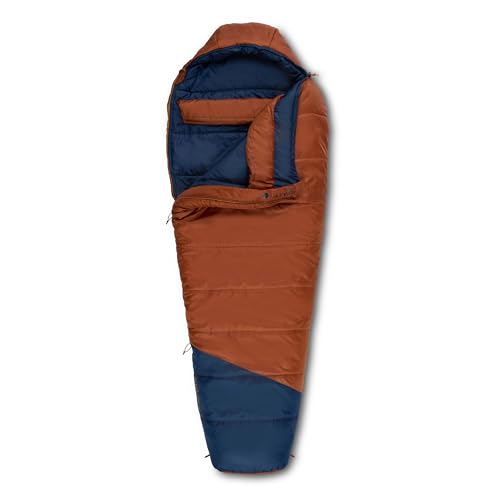
The Kelty Mistral Down Sleeping Bag focuses on budget-friendly warmth with 550-fill down and practical materials, including a durable 68D recycled Teffeta outer shell and soft inner liner. The offset quilt pattern helps distribute insulation evenly, reducing cold spots and providing balanced warmth throughout the bag. This model is designed for three-season use, delivering reliable performance without a premium price tag. The combination of recycled materials and thoughtful stitching patterns contributes to durability and long-term use, making it a solid pick for budget-conscious campers who still want dependable warmth.
Weight is managed to keep packing reasonable, and the bag is designed to be easy to care for in typical camping conditions. The 0°F rating associated with some Mistral variants indicates strong cold-weather performance for a budget option, though real-world results will depend on layering and sleeping pad choices. Overall, Mistral provides solid warmth with practical features for hikers seeking value and reliability in cooler nights.
In sum, the Kelty Mistral is a strong budget pick for three-season use, offering durable construction, economical insulation, and a weight-conscious design that suits casual backpacking and overnight trips without overspending.
Buying Guide
- Temperature ratings: Understand the difference between comfort, limit, and extreme temperatures. Choose a bag with a comfort rating near the typical nighttime temperatures you expect. If you camp in damp, windy conditions, consider bags with good draft protection and moisture-resistant fills like DriDown.
- Down fill power and amount: Higher fill power (e.g., 650) yields better loft per ounce and warmth-to-weight. Look at both fill power and overall fill weight (grams or ounces) to gauge warmth for the weight you carry.
- Bag shape and size: Mummy bags retain heat efficiently but can feel snug; semi-rectangular or classic rectangular designs offer more movement. Size options (like CW295 vs CWM400) matter for fit and warmth, so select a size that matches your height and shoulder width.
- Weight and compressibility: For backpacking, weight and packability matter. Note the bag’s weight and the size of its stuff sack. A lighter bag with a smaller packed size improves backpack efficiency on long trips.
- Shell and lining materials: Durable nylon or ripstop shells resist abrasion; softer linings improve comfort. Recycled materials and treated down (like DriDown) can offer better moisture resistance in damp environments.
- Zippers and draft protection: Look for full-length or two-way zippers and draft tubes to prevent heat loss. Zipper geometry and zipper guards reduce snagging and cold spots at the opening.
- Durability and maintenance: Consider how the bag will hold up to frequent use. Bags with easy-care fabrics and robust stitching will last longer and maintain loft after multiple trips.
- Weight range and use case: If your trips involve fast-paced hikes, prioritize lighter, compact models. For car camping or late-season trips, heavier bags with higher warmth can be acceptable.
- Brand reputation and warranty: Reputable brands often offer better customer support and warranties. A solid return policy helps if the bag doesn’t meet your expectations after field testing.
- Keep in mind the sleep setup: Your sleeping pad and layering affect overall warmth. Pair a bag with an appropriately warm pad to maximize comfort in cooler environments.
Choosing the right budget down sleeping bag involves balancing warmth, weight, and packability against price. The five options above offer a spectrum of warmth, sizing, and design features to match different camping styles—from ultralight backpacking to winter-ready treks. By evaluating fill power, temperature guidance, bag shape, and size, you can pick a dependable, affordable sleeping bag that keeps you comfortable on outdoor adventures without overspending.