Backpacking on a tight budget doesn’t mean you must sacrifice shelter. Trekking pole tents offer a compact, lightweight solution that leverages trekking poles for support and reduces the weight carried each day. The five tents highlighted here balance price and performance, delivering weather resistance, roomy interiors, and easy setup for solo hikers and small groups. From ultralight 1-person shelters to capable 2-person designs, these options aim to maximize space, minimize weight, and keep you comfortable on multi-day journeys.
| Product | Brand | Weight | Capacity | Notable Feature |
|---|---|---|---|---|
| LANSHAN 1 PRO Ultralight | MIER | 1.74 lb | 1 | Seam-taped rainfly and bathtub floor; compact packability |
| Underwood Aggregator 1 Person Tent | Underwood Aggregator | 2.50 lb | 1 | Trekking-pole setup; poles not included; quick pitch |
| Featherstone Backbone 1 Person | Featherstone | 2.38 lb | 1 | Two doors and vestibules; ultralight design |
| Nature Link Altair One | Nature Link | ≈2.00 lb | 1 | Waterproof Silnylon; double-wall; ample vestibule |
| LANSHAN 2 PRO Ultralight | MIER | 2.21 lb | 2 | Same protection as 1P version; larger footprint |
LANSHAN 1 PRO Ultralight Tent

The LANSHAN 1 PRO is a solo trekking-pole tent designed for ultralight backpackers who still want reliable weather protection. Weighing about 1.74 pounds, it uses 20D nylon across the rainfly and floor, with seam-taped rainfly and a 5000mm bathtub floor for serious moisture resistance. Its compact packed size (roughly 13.8 inches by 5.9 inches) helps keep your main pack lean. The interior layout provides enough space for a tall hiker and essentials, plus a mesh pocket for small items, keeping gear organized inside a minimal shelter.
Constructed to withstand wind and light precipitation, this model remains sturdy in adverse conditions and offers notable UV and tear resistance. While the tent is designed to be set up with trekking poles, you can swap in compatible supports if needed, maintaining a lightweight footprint. For budget-conscious solo hikers who prioritize weight savings without sacrificing protection, the LANSHAN 1 PRO offers a strong balance of warmth, weather sealing, and portability.
Underwood Aggregator 1 Person Tent
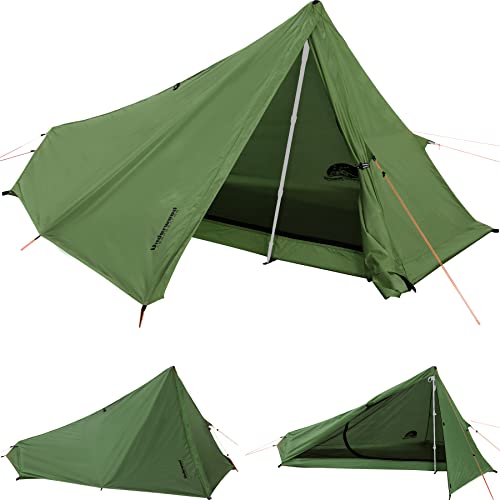
This 1-person trekking-pole tent emphasizes ultralight backpacking with flexible setup. It’s designed to be pitched with trekking poles or sticks taller than 46 inches, and importantly, no trekking poles are included. The shelter weighs about 2.5 pounds and measures 7’3″ x 2’9″ x 3’1″ when erected, with a compact packed size of 14″ x 5.5″ x 5.5″. The 210T polyester fabric uses PU 5000 coatings for weather resistance, and factory-sealed seams add a layer of reliability for damp outings.
Setup is intended for one person and can be accomplished in roughly two minutes, even with limited experience. This makes it a strong option for hikers seeking a simple, fast-pitch shelter that tolerates changing weather while keeping weight and bulk to a minimum. The Underwood solution suits solo trekkers who want flexibility in pole choices and a straightforward, dependable shelter on a budget.
Featherstone Backbone 1 Person Tent

The Featherstone Backbone 1 Person Ultralight Tent prioritizes space and efficiency for solo hikers. Its minimum trail weight sits around 2 lbs 6 oz, delivering a comfortable interior that accommodates a full-sized sleeping pad. The design features two doors and vestibules, along with a 40/60 pole placement that helps maximize headroom. A tapered floor further enhances usable space, while the vestibule areas provide storage for packs and footwear, helping you stay dry and organized after a day on the trail.
Weather protection is reinforced by seam-taped construction and Sil-Nylon materials, with a TPU waterproof zipper for smooth entry and reduced snagging. Sil-Nylon brings UV, rain, and wind resistance in a lightweight form, making this Featherstone model a practical choice for solo backpacking where weight and space are critical, yet reliability matters in variable conditions.
Nature Link Altair One Tent

The Altair One from Nature Link is a dedicated ultralight option for 1-person solo trips. With a core trail weight around 2 pounds, it focuses on compact, efficient space and protection. The tent uses a 3000mm waterproof 20D Ripstop Silnylon shell, which is seam-sealed to prevent leaks, and SAB zippers designed to reduce snagging and improve weather sealing. The design emphasizes a balance of interior space and packed size, making it a feasible choice for hikers who want reliable shelter without carrying extra bulk.
Ventilation and moisture control are addressed with an inner mesh layer and two doors that can improve airflow while reducing condensation. The Altair One offers a protective vestibule and dual-wall construction to keep gear dry in variable weather. Built for three-season use, this Nature Link model aims to deliver dependable performance in a compact footprint, suitable for bushcraft outings, thru-hikes, and routine weekend trips on a budget.
LANSHAN 2 PRO Ultralight Tent

The LANSHAN 2 PRO brings the same protective features as the 1P version but in a 2-person footprint. Weighing around 2.21 pounds, it uses 20D nylon for the rainfly and floor, with seam-taped construction and a bathtub-style base for enhanced waterproofing. Its compact pack size mirrors the 1P version, and the interior dimensions offer ample space for two hikers plus gear. This model maintains strong wind resistance and weather sealing while remaining accessible to budget-minded campers seeking shared shelter on longer trips.
With a larger footprint, the LANSHAN 2 PRO still prioritizes ease of setup using trekking poles or suitable supports. The tent is designed to endure wind and hail while remaining light for two people. Two mesh pockets contribute to organization inside, and the overall design emphasizes a sturdy, affordable solution for friends or partners who want a reliable ultralight option without paying premium prices for larger, heavier tents.
Buying Guide
When choosing a budget trekking pole tent, consider how you’ll use it most. Solo trekking often benefits from lighter, compact models, while occasional two-person trips prioritize interior space and vestibules for gear storage. Across these five options, weight, weatherproofing, and setup flexibility are the main differentiators. Be mindful of whether you need ready-made poles or if you’ll rely on trekking poles you already carry, and assess the trade-off between double-wall protection and potential condensation with single-wall designs.
- Weight versus space: If you hike fast and light, prioritize sub-2.5-pound solos with compact packed sizes. For occasional two-person trips, look at models around 2.0–2.5 pounds per person to balance comfort and weight.
- Weather resistance: Look for seam-sealed seams, durable rainflies, and floor materials. Silnylon and PU-coated nylon offer different durability and water protection, while bathtub floors reduce moisture ingress.
- Ventilation and condensation control: Double-wall tents with mesh panels and two doors often provide better airflow, reducing interior moisture on humid nights and after cooking outside the tent.
- Door count and vestibules: Two doors and two vestibules enhance access and gear storage, especially for two-person setups, while solo tents can still benefit from a vestibule for footwear and packs.
- Setup method: Trekking-pole tents rely on adjustable poles or existing trekking poles. Check whether trekking poles are included or if you’ll provide your own; some models require no poles at all for a pole-less setup.
- Durability and materials: 20D nylon and Silnylon fabrics offer lightweight protection with varied durability and weather resistance. Polymer zippers with TPU waterproofing can improve reliability in damp conditions.
- Packability and efficiency: Consider how the packed dimensions align with your pack’s space. Smaller, flatter packs make long trips more comfortable when every ounce counts.
- Temperature and season rating: Most ultralight tents are designed for three-season use. If you expect heavy snow or extreme cold, you may need a more robust shelter or add a weather-ready outer layer during shoulder seasons.
- Warranty and support: Check manufacturer warranties and replacement parts availability. A tent with solid support and readily available seam sealant or patches adds long-term value.
In sum, the best budget trekking pole tent for you depends on solo versus double occupancy, expected weather, and how compact you want your setup to be. The models highlighted here demonstrate that lightweight, weather-resilient shelters can be affordable without sacrificing essential features such as durability, vestibule space, and quick setup. By comparing weight, capacity, and fabric construction, you can select a model that aligns with your typical backpacking itineraries and comfort preferences.