Choosing the right insulated sleeping pad is essential for comfort and warmth during camping, backpacking, or car camping. The five pads below represent a spectrum of warmth, weight, and packability, from ultralight designs to robust self-inflating models. This guide highlights key specifications such as R-value, thickness, and construction to help you select the best pad for three-season use or cold-weather trips. Read on for concise overviews, a quick comparison, and practical buying guidance to match your camping style with the right insulation.
| Product | Brand | R-Value | Thickness |
|---|---|---|---|
| Big Agnes Rapide SL | Big Agnes | Up to 4.8 | 3.5″ |
| TREKOLOGY UL R7 | TREKOLOGY | 7.2 | 4″ |
| Hikenture Sleeping Pad | Hikenture | 6.2 | 3.2″ |
| Sea to Summit Ether Light XR | Sea to Summit | 4.1 | 4″ |
| Naturehike NKTR Air | Naturehike | 4.6 | 3.2″ |
Big Agnes Rapide SL Insulated Pad

The Rapide SL is engineered for warmth with an insulated core and heat-reflective film layers. It offers up to an R-value of 4.8, making it well-suited for three-season use and cooler nights. The dual layers of reflective film help minimize heat loss without adding bulk to the packed size. This model is 3.5 inches thick, providing substantial cushioning while staying compact enough for backpacking trips. A hallmark feature is the quilted top surface, which adds a cushioned, bed-like feel that reduces the typical “air mattress” bounce during movement.
The pad employs an offset I-Beam construction to balance weight and stability. The result is a stable sleeping surface that remains comfortable across a range of sleeping positions, with outer chambers measuring 4.25 inches to cradle the sleeper and reduce edge roll. In its compact form, Rapide SL remains highly packable, appealing to ultralight backpackers who still want adequate insulation for chilly nights. The lineup is available in multiple sizes, including solo and wider configurations, to fit different body sizes and tents.
Materials focus on durability and low weight: a tough, lightweight nylon shell with a TPU laminate ensures weld strength and longevity in rugged outdoor conditions. A included Pumphouse Sack assists quick inflation and packing, delivering a streamlined setup for late arrivals to camp. This pad sits in the premium mid-range for warmth and comfort, balancing warmth retention with portability for hikers who refuse to compromise on sleep quality.
TREKOLOGY UL R7 Sleeping Pad

The TREKOLOGY UL R7 sleeping pad emphasizes all-season insulation with a robust 7.2 R-value, designed to resist ground chill in diverse climates. Despite the high insulation, it remains ultralight, with a weight around 2 pounds, and it packs down to the size of a water bottle for easy backpacking. This combination makes it a strong choice for hikers who prioritize warmth while keeping weight and bulk to a minimum.
Measuring approximately 70.8 inches long by 24 inches wide, with a thickness of about 4 inches, the R7 pad offers ample surface area and support for most sleepers. Its construction focuses on a balanced sleeping surface that minimizes bottoming out for side and back sleepers alike. The pad’s design seeks to optimize warmth-to-weight, making it suitable for shoulder-season trips and mild winter conditions when paired with a proper sleeping bag and tent setup.
Careful attention to packability and durability is evident in the SGS-certified foam and fabric choices. The combination of lightweight materials, a defendable R-value, and versatile sizing makes TREKOLOGY a frequent pick for campers who want reliable warmth without carrying excess bulk on the trail.
Hikenture R-Value 6.2 Insulated Pad
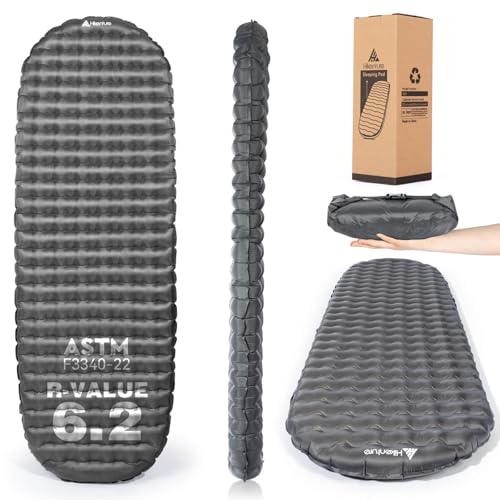
Hikenture’s insulated sleeping pad targets cold-weather comfort with an R-value of 6.2. The pad is about 3.2 inches thick, providing substantial cushion that supports a variety of sleeping positions while minimizing pressure points. Weighing roughly 1.53 pounds, it remains a lightweight option for backpackers who don’t want to sacrifice warmth for weight.
The pad uses a unique airbag-like structure that distributes body pressure evenly, reducing the sensation of sinking or bottoming out when lying down or changing positions. At a compact 72 inches long and approximately 20 inches wide, it suits most solo campers who value warmth and portability. A notable feature is the 2-in-1 storage bag design, enabling compact packing of clothing or small gear alongside the pad, which helps maximize carry space in tight packs or tents.
Overall, Hikenture emphasizes warmth, low weight, and practical storage options. It’s a fitting choice for late-season trips and mountain environments where colder temperatures demand a pad that retains heat without adding excessive bulk to your pack.
Sea to Summit Ether Light XR Pad

The Sea to Summit Ether Light XR uses ThermalCore insulation in multiple TRM layers to reflect infrared energy back to the sleeper, enhancing warmth without creating excessive bulk. With an ASTM-tested R-value around 4.1, this pad is designed for three-season comfort and moderately cold environments. Its rectangular profile contributes to a stable sleeping surface while keeping weight manageable for backpackers who want reliable warmth without a heavy footprint.
Measuring 72 by 25 inches and 4 inches thick, the Ether Light XR balances width and height to reduce the chance of rolling off and to support various sleeping styles. The pad’s insulation design focuses on minimizing heat loss while maintaining a lighter overall weight and a smaller packed size compared with some traditional mats. This makes it a strong option for recreational backpackers who still need solid warmth in variable climates.
Naturehike NKTR Air Insulated Pad

The NKTR Air insulated pad from Naturehike features an eight-layer aluminum molded 3D insulation structure designed to reduce heat loss and increase warmth. It carries a solid R-value of 4.6 and an 8 cm (about 3.2 inches) thick profile, delivering substantial cushioning for comfort on uneven ground. The pad is sized for full-length use and weighs around 27 ounces, offering a favorable warmth-to-weight ratio for hikers who want extra insulation without a heavy pack.
Naturehike emphasizes compact storage and quick setup, leveraging a heat-reflective system to retain warmth. The mat is suited for three-season use, with an XL design that accommodates longer torsos and a variety of sleeping styles. The product is noted to be vacuum-packed, meaning initial inflation may require a brief period to reach full loft, but it inflates reliably for ongoing use with minimal effort.
Buying Guide
When choosing an insulated sleeping pad, consider how you plan to use it: the environment, your sleep style, and how much weight you’re willing to carry. Here are the key purchase considerations to compare across pads:
- R-value and climate suitability: Higher R-values offer more warmth for cold conditions. If you camp in temps near or below freezing, prioritize pads with R-values of 4.0 or higher. For three-season use in moderate climates, R-values around 4.0–6.0 provide ample warmth.
- Thickness and comfort profile: Thicker pads generally cushion more and reduce contact with the ground, but they can add weight. If you sleep on your side or shoulder, a pad around 3–4 inches thick often balances comfort and packability.
- Weight and packability: Ultralight hikers prioritize lighter pads that compress well. Pads under 2 pounds are common for solo backpacking, while thicker or higher-R models may exceed this benchmark.
- Size and shape: Solo sleepers often select standard 72–77 inch lengths; wider pads accommodate broader shoulders. Consider tent door clearance and camp setup space when choosing width.
- Durability and materials: Look for ripstop nylon shells, TPU laminations, and robust edge walls. These features improve longevity in rough campsites and during frequent setup/teardown cycles.
- Inflation method and ease of use: Self-inflating mats save effort, while inflatable pads with pump sacks or integrated pumps offer rapid loft. Vacuum packing can affect initial inflation time but saves space.
- Repairability and extras: Some pads include repair patches or come with storage bags. These extras can be helpful for long trips or irregular terrains.
- Fit with other gear: Consider compatibility with your sleeping bag, tent, and ground surface. In very cold conditions, stacking a closed-cell foam pad beneath an inflatable pad can boost warmth.
- Durability vs. cost: Higher performance often comes with a greater upfront cost. Weigh warmth, weight, and expected use to determine value for your trips.
In practice, the best insulated pad depends on your priority set. For extreme cold or high-altitude trips, models with the highest R-values and thick cushions—such as TREKOLOGY UL R7 or Hikenture—deliver maximum warmth with careful weight management. For hikers seeking warmth without excess bulk, Big Agnes Rapide SL and Sea to Summit Ether Light XR offer strong thermal performance with adaptable pack sizes. For a balance of insulation and compactness, Naturehike NKTR Air provides solid warmth and a lighter footprint, while TREKOLOGY and Hikenture provide robust warmth-to-weight ratios ideal for three-season adventures.