For hikers and campers who value speed, efficiency, and packability, a lightweight backpacking tent is essential. The right two-person shelter can dramatically reduce weight without sacrificing comfort or weather protection. The following five tents represent a balanced mix of ultralight design, durability, and ease of setup, suitable for weekend trips or longer expeditions across varied American terrains. Each option below emphasizes compact packs, breathable interiors, and dependable weather resistance, helping you choose a trusted shelter for your next trek without carrying excess weight.
| Product | Brand | Approx Weight | Key Feature |
|---|---|---|---|
| Kelty Grand Mesa 2P Tent | Kelty | N/A | 3-season, single door + vestibule; easy setup with aluminum poles; seam taped |
| Marmot Crane Creek 2P Tent | Marmot | N/A | Lightweight 2P with 32 sq ft interior; seam taped fly and floor; durable poles |
| Naturehike Cloud Up Pro 2P Tent | Naturehike | 4.25 lbs | Ventilation window; double-layer; compact pack size with footprint |
| Clostnature Polaris 2P Tent | Clostnature | 5.29 lbs | Waterproof PU 5000; two doors; roomy 3-season design |
| OneTigris Stella 4 Season 2P Tent | ONETIGRIS | 4.4 lbs | 4-season, removable blackout outer; lightweight 20D shell |
Kelty Grand Mesa 2P Tent

The Kelty Grand Mesa 2P is designed as a dependable 3-season shelter that balances weight and practicality for backpackers. It features two compact folding DAC aluminum poles for stable setup and quick pitching. The tent uses weather-resistant 68D polyester for both the floor and the rainfly, helping shed wind-driven rain while keeping weight reasonable for a two-person model. Fully seam-taped construction minimizes leaks, and color-coded clips and fly attachments simplify assembly in low light or rough weather. A single door with a vestibule provides a functional entry and storage nook for packs or boots, preserving interior space for sleeping pads and gear.
Setup is straightforward thanks to Kelty’s streamlined design updates, including EZ-Zip vestibule access and a Shark Mouth carry bag that makes packing up smoother after a long day on trail. While weights aren’t listed publicly for this model, the Grand Mesa line is known for offering reliable durability at a reasonable price point, which makes it a practical pick for hikers seeking a lightweight, no-fruss shelter. The combination of durable fabric, solid pole construction, and simple assembly makes it suitable for weekend trips and longer treks where reliability matters more than ultra-minimalism.
Marmot Crane Creek 2P Tent

The Marmot Crane Creek 2P balances lightness with livable interior space, delivering 32 square feet of internal area while remaining compact enough for backpacking. The tent uses seam-taped polyester for both the fly and floor, helping to keep moisture out in a variety of conditions. The frame is supported by 7000-series aluminum poles, offering sturdy performance without adding excessive weight. This combination makes it well-suited for three-season adventures where you want a reliable shelter that packs small, yet remains comfortable for two people and their gear.
Inside the Crane Creek, occupants enjoy efficient use of space for two sleepers and gear storage, with a straightforward setup that suits hikers prioritizing simplicity. While specific weight figures aren’t listed in the brief specs provided, Marmot’s Crane Creek line is known for combining durability with a low pack weight in a compact two-person footprint. Its weatherproof protection and robust pole system help ensure stability across varying campsites, whether you’re crossing gentle ridgelines or pitching near a forested lake.
Naturehike Cloud Up Pro 2P Tent
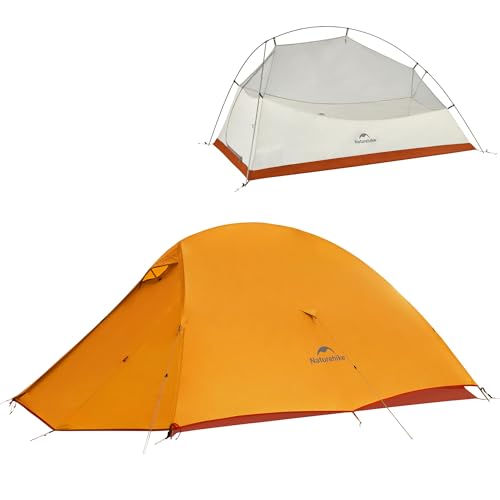
The Naturehike Cloud Up Pro 2P is a compact, lightweight two-person tent designed for backpacking with a focus on portability and weather resistance. Weighing around 4.25 pounds, it is easily packable for longer trips, and its 82.7″ length provides ample sleep space for most campers. The tent uses durable 210T polyester fabric and offers a double-layer construction for improved insulation and condensation control. It ships with a footprint, enhancing ground protection and prolonging the life of the tent on rough terrain.
Key features include a ventilation window above the front door to improve airflow and minimize condensation, a larger front door for easier access, and a sturdy, freestanding frame supported by two aluminum poles. The Cloud Up Pro is designed for backpackers who want a balance of weight, space, and durability, with a design that remains accessible for newer hikers while still meeting the needs of more seasoned adventurers. Its compact packed size and straightforward setup are notable advantages on multi-day trips where every ounce counts.
Clostnature Polaris 2P Tent

The Clostnature Polaris 2P is a roomy 2-person tent designed for three-season use, featuring a PU 5000 coating for solid waterproof performance. It offers two doors, which improves access and ventilation for two occupants or a couple sharing gear space. The tent is built with a lightweight frame and a durable outer shell to withstand typical backpacking conditions. Its overall dimensions (roughly 7’3″ x 4’11” x 3’10”) provide ample sleeping space without adding unnecessary bulk, making it an appealing option for hikers who want more interior room while keeping the weight manageable.
Construction emphasizes durability and weather resistance, with double-layer protection to help manage wind and moisture. The Polaris is designed for users who value a stable and comfortable shelter during outings across varied terrain and weather, including damp nights and sporadic showers. While the exact weight is not listed in the concise spec, the Polaris sits in a practical weight range for a two-person, 3-season tent and offers dependable performance for weekend warriors and longer treks alike.
OneTigris Stella 4 Season 2P Tent

The OneTigris Stella 4 Season 2P Tent is designed for four-season use, combining durability with a lightweight footprint that still supports a pair of campers. Constructed with a 20D nylon outer fabric and a single-layer silicone coating, the shelter is both sturdy and portable, tipping the scales at about 4.4 pounds. A notable feature is the removable blackout outer, which provides flexibility for different camping scenarios—from dark, cool nights to brighter mornings. The interior mesh helps maximize airflow, while the 40D bottom offers additional protection against ground moisture.
With a 3000mm waterproof rating, the Stella is built to handle moderate rain and damp conditions typical of shoulder-season trips. The overall design emphasizes quick setup and easy packability, making it attractive for hikers who pursue fast-and-light travel without sacrificing shelter reliability in a range of weather. The Stella’s combination of lightweight materials, weather resistance, and four-season versatility makes it a strong candidate for campers who expect to encounter snow, rain, or wind on their adventures.
Buying Guide
Choosing the right lightweight backpacking tent involves balancing weight, space, and weather protection with your planned activities. Consider how many nights you’ll camp, the typical climate, and how much interior space you prefer for sleeping and gear storage. Below are essential factors to compare across 2P tents and similar models.
- Weight and pack size: If you’re counting ounces, examine stated trail weight (the tent without stakes or footprint) and packed size. Some tents list feasible alternative weights, depending on inner tent or fly configurations.
- Seasonality and climate: Three-season tents are common for spring, summer, and fall trips, while four-season designs add structure for higher wind and snow. Your typical terrain will influence this choice.
- Doors and vestibules: Two doors improve access and ventilation for two occupants; vestibule space enhances gear storage outside the sleeping area, reducing crowding inside the tent.
- Freestanding versus non-freestanding: Freestanding models simplify setup on uneven ground and do not require stakes to stand, which is advantageous for quick pitches on varied terrain.
- Materials and durability: Look at the fabric and coating (PU, silicone, or poly) for weather resistance. Poles made from aluminum are common in lightweight tents and offer good strength-to-weight ratios.
- Ventilation and condensation management: Tents with mesh panels and ventilation windows reduce condensation and improve comfort in humid conditions.
- Footprint and ground protection: A groundsheet or footprint extends the life of the tent floor, especially on rocky or uneven campsites. Check compatibility with your model.
- Space planning: Interior dimensions influence sleeping pad size, bag space, and how you arrange gear. Longer campers may want extra length or taller ceilings for sitting up.
- Price-to-performance balance: Higher-end models may offer lighter weight and better weather protection, while budget options can still deliver solid performance for casual trips.
Across these five options, you’ll see a spectrum from compact, lightweight two-person shelters to more robust four-season models. Each choice serves different backcountry goals—from fast-and-light missions to extended hunts in variable weather. When evaluating, align your selection with typical trip length, expected climate, and how much extra interior space you need for your gear. This approach ensures you gain a dependable shelter that remains easy to carry and reliable when you reach camp after a long day on the trail.