Backpacking in varied weather demands reliable rain gear that protects you and your kit without weighing you down. This guide highlights five practical options—tarp shelters, hammock rain flies, ponchos, and packable rain suits—to balance weather protection, weight, and portability for American hikers. Each choice prioritizes durability, ease of setup, and packability so you can tailor your kit to a wide range of backcountry conditions.
Whether you’re setting up tarp camp under a canopy, protecting your hammock, or simply staying dry during a sudden downpour, the right gear can make the difference between a miserable hike and an enjoyable adventure. The selections below cover multi-use shelters, full-body protection, and lightweight options designed for fast-moving backpackers. Read on to compare performance, weight, and setup needs to find the best fit for your next trek.
| Product | Brand | Type | Notable Feature |
|---|---|---|---|
| FREE SOLDIER Waterproof Portable Tarp Shelter | FREE SOLDIER | Tarp Shelter | 2500 PU waterproof, UV protection |
| Wise Owl Outfitters Hammock Rain Fly | Wise Owl Outfitters | Rain Fly | Six guy lines, stakes included |
| 33,000ft Men’s Rain Suit | 33,000ft | Two-Piece Rain Gear | Packable; hooded jacket and pants |
| KastKing AquaLite Rain Suit | KastKing | Lightweight Rain Suit | 100% waterproof; loose fit |
| Onewind Backpacking Rain Poncho | onewind | Poncho | Silnylon ripstop; packable |
FREE SOLDIER Tarp Shelter
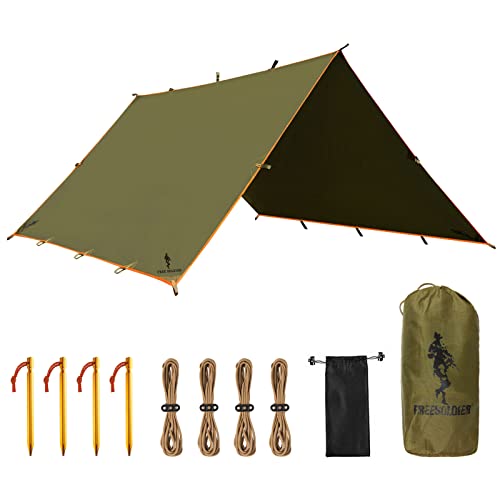
The FREE SOLDIER tarp is a versatile shelter option for minimalist setups or as a sun/rain shield. It measures 118″ by 126″ when expanded, providing ample coverage for two hikers or a shaded dining area for camping gear. Constructed from 210T ripstop polyester with a 2500 PU waterproof rating, the tarp emphasizes weather resistance while remaining portable. The fabric’s tear resistance and puncture resistance contribute to long-term durability, and the heat-sealed, melted seams help prevent water penetration during sustained downpours. A reinforced ridgeline seam further protects connections during high-wind storms.
With rugged protection and straightforward setup, this tarp can double as an awning over a tent or a ground cover in damp sites. Its packability is a practical advantage for backpackers prioritizing space: it folds into a compact form while still offering substantial shelter when needed. The tarp’s weight—about 1.2 kg (42 oz)—strikes a balance between sturdy build quality and carry efficiency for longer trips where reliable shelter matters more than ultralight concerns.
Wise Owl Hammock Rain Fly

The Wise Owl Outfitters Rain Fly is designed to protect a hammock setup or act as a compact shelter for hammock camping. It’s built from ripstop nylon with taped seams to keep rain out, ensuring you stay dry in wet conditions. The package includes six 10-foot guy lines and aluminum tent stakes, a stake pouch, and a waterproof carry bag, enabling quick, reliable setups across varied terrain. At roughly 26 ounces, the rain fly remains light enough for frequent backpackers while delivering robust rain protection for hammock-based camping.
Quick and predictable installation is a highlight, as the six guylines and stakes help you position the tarp to shield from prevailing winds and sideways rain. Because it’s designed to cover a hammock, the rain fly often complements a lightweight sleep system without requiring a full tent. This makes it a practical choice for hikers who plan to sleep in a hammock but still need dependable rain protection throughout the night.
KastKing AquaLite Rain Suit

The KastKing AquaLite Rain Suit emphasizes a lightweight, loose-fit design that helps you stay dry while allowing comfortable layering. It’s described as 100% waterproof with a durable, anti-tear construction, featuring sealed seams to prevent leaks in heavy downpours. The jacket comes with an adjustable hood, a storm flap for wind and water resistance, and a large side pocket to keep essentials dry. Elastic cuffs and hems provide a snug fit, while the loose cut accommodates thicker base layers on colder trips. This suit is well-suited for hikers who value mobility and quick donning in changing conditions.
Designed for versatility, the AquaLite Rain Suit aims to balance coverage and breathability. Its performance in rain-heavy environments makes it a reliable option for hikers who expect prolonged exposure to wet weather, including roadside shelter stops and extended trail sections. The packaging suggests sizing adjustments for optimal fit over layers, a practical note for travelers who vary their clothing choices with the season.
33,000ft Rain Suit

The 33,000ft Rain Suit is a portable, two-piece set designed for travel and outdoor activities such as golf, hiking, and cycling. It ships with a storage bag that fits in a suitcase, making the suit easy to pack without adding bulk. The jacket includes a hideaway hood and elastic cuffs, while the pants feature an elasticized waistband, drawstring, and half-leg zips for quick on-and-off. Velcro closures at the bottom leg help tailor fit and protect against splash. This suit’s emphasis on compact storage makes it ideal for travelers who want reliable rain protection on the go.
Key advantages include its practical packability and adjustable elements that accommodate different body types and layering systems. The two-piece design allows you to wear either component independently in mild weather or combine them for more serious downpours. While not as feature-rich as heavier, dedicated rain systems, this option excels in scenarios where space and ease of transport take precedence over maximum weatherproofing.
Onewind Backpacking Rain Poncho

The Onewind Rain Poncho provides a minimalist, highly packable option for wet-weather protection. Constructed from 1.1-ounce Silnylon ripstop with a PU coating, it achieves about 3000mm waterproof rating and good tear resistance. The poncho weighs only about 245 grams (8.6 ounces) and folds into a compact 2.8″ x 7.1″ stuff sack, making it ideal for ultralight backpackers who need quick coverage over a pack. At 98 by 56 inches, it offers ample drape for most body sizes and can cover a backpack without exposing your gear to rain.
Practical touches include cord adjusters and side fasteners to tailor fit to individual needs, along with a hood to protect the head from wind-driven rain. The poncho’s open design enables freedom of movement and rapid shedding when the weather clears. While not a full-body rain suit, it excels as an ultra-lightweight, emergency-ready option that complements other layers in a modular rain system.
Buying Guide: How To Pick The Right Rain Gear For Your Backpacking Style
Choosing the best rain gear for backpacking depends on your route, typical weather, and how much weight you’re willing to carry. Here are key considerations to help you compare tarp shelters, hammock rain flies, ponchos, and rain suits:
- Protection type and coverage: Tarps offer broad shelter for you and your gear but require setup space and wind awareness. Rain flies designed for hammocks give targeted protection with minimal weight, ideal for hammock campers. Ponchos provide immediate, lightweight coverage for unpredictable rain, while full rain suits offer comprehensive protection with zippers and vents for longer wet stretches.
- Weight and packability: Ultra-light hikers may prioritize ponchos and compact rain suits, while campers who value shelter versatility may accept heavier tarps. Consider the total system weight, including stakes, guylines, and stuff sacks.
- Waterproofing and seams: Look for sealed or taped seams and high waterproof ratings (for tarps, a PU rating; for jackets and suits, waterproof fabrics and bonded seams). Durability is crucial in backcountry use where gear relies on reliable performance over multiple trips.
- Breathability and comfort: Rain gear should balance waterproofing with ventilation to reduce clammy interiors. Hood design, venting options, and mesh linings can improve comfort during active movement or temperature swings.
- Fit and layering: Two-piece suits fit over bulkier layers, while jackets with adjustable hoods and cuffs adapt to changing temperatures. Ponchos accommodate a range of body sizes but may feel bulky or interfere with straps if not sized appropriately.
- Durability and misuse tolerance: Heavy-duty tarps and ripstop rain flies tolerate rough backcountry use, while lightweight ponchos may be better suited for intermittent showers or day hikes. Choose gear that suits expected terrain and wear-and-tear patterns.
- Care and maintenance: Materials like ripstop nylon and Silnylon require specific care to maintain waterproofing. Re-sealing and proper drying after use extend lifespan and keep performance high across trips.
- Cost and value: A well-rounded rain system often saves money over time by protecting your other gear and keeping you comfortable, which helps maintain morale on longer expeditions.
Product-specific choices often come down to the kind of trip you plan. If you hike in areas with frequent rain and wind and value a stationary shelter at base camps, a robust tarp like the FREE SOLDIER option provides broad protection and multiple setup configurations. For hammock campers, the Wise Owl Rain Fly is a focused solution that pairs well with a lightweight hammock system. If you’re chasing ultra-lightweight protection that folds away easily, the Onewind poncho and KastKing AquaLite rain suit offer compact, versatile options, while the 33,000ft Rain Suit gives a traditional two-piece system with straightforward layering and packing.