Triathletes rely on hydration systems that blend into the bike’s airflow while keeping liquids easily accessible. This guide highlights five front- and frame-mounted options that balance aerodynamics, accessibility, and adjustability for racing and training. Each pick prioritizes compatibility with common aero handlebars and quick refills on the fly. The table below offers a quick at-a-glance comparison to help you decide which setup fits your cockpit, riding style, and distance goals.
| Product | Brand | Type | Notable Feature |
|---|---|---|---|
| XLAB Torpedo Versa 200 Front Hydration System | XLAB | Front Hydration System | Refill on the fly; highly adjustable MEGADJUST |
| Control Tech Time Zone Front Hydration System | Control Tech | Front Hydration System with Bento Box | Integrated storage; optimized aerodynamics |
| XLAB Torpedo Kompact 125 Front Hydration System | XLAB | Front Hydration System | Compact 241 mm length; wide adjustment |
| XLAB Hydroblade Tri Front Hydration System | XLAB | Front Hydration System | CFD-optimized aero; refillable cap; MEGADJUST |
| Speedfil F1 Bicycle Water Bottle | Speedfil | Frame Mounted Hydration System | Hands-free, refill port; frame-mounted for low CG |
Below are five selected options that best align with a triathlete’s needs across aerodynamics, accessibility, and installability. Each product section includes a concise overview, a visual reference, and highlights from their listed features to help with side-by-side comparisons.
XLAB Torpedo Versa 200 Aluminum Front Hydration System

The Versa 200 positions the bottle between the athlete’s arms, preserving cockpit space and allowing you to maintain a steady grip on the aeroducts. Refill on the fly is a central feature, letting you top up without reducing tempo or momentary control. The system is designed to be aerodynamically invisible, with a clean bottle silhouette that minimizes drag as wind flows around the bottle and along a Kamm Tail rear. Airflow straighteners at the cap help deliver a clean exit, reducing turbulence at exit paths.
- Easy to drink and refill without removing the bottle from the cage
- Aerodynamically hidden between the arms to reduce drag
- MEGADJUST mounting enables wide cockpit configurations (70–150 mm, up to 20° rotation)
Overall, Versa 200 combines accessibility with broad adjustability, making it a strong choice for riders seeking a precise front-hydration position that won’t disrupt aerodynamics or handling.
Control Tech Time Zone Front Hydration System

This front hydration system emphasizes streamlined efficiency with an integrated bento-style storage area for on-the-go nutrition during the ride. Its aerodynamic shape minimizes drag while keeping essential energy gels, bars, or other small items within easy reach. The design caters to center-to-center aerobar extension widths from 90 mm to 120 mm, aligning well with many triathlon setups and keeping weight distribution favorable for a steady, straight-ahead ride.
- Aerodynamic profile reduces drag along the front cockpit
- Accommodates aerobar extension width between 90–120 mm
- Integrated storage supports on-ride nutrition for longer events
The combination of minimal drag and practical nutrition storage makes it a strong option for riders who want to keep hydration and fueling tightly integrated with their front view and handling.
Xlab Torpedo Kompact 125 Front Hydration System

The Kompact 125 is designed for compact performance—measuring just 241 mm in length, it places hydration neatly between the arms while keeping room for devices and cables in front of the cockpit. It installs quickly using SECURECLIP brackets and silicone-coated Velcro straps, delivering a secure fit for most aero extensions from 70 mm to 150 mm. The MEGADJUST mounting system provides a broad adjustment range, enabling easy alignment with a wide array of aerobar setups and ensuring compatibility with Garmin, Wahoo, and other quarter-turn computer mounts.
- Compact footprint keeps precious cockpit space free
- Quick, secure installation with SECURECLIP and Velcro straps
- MEGADJUST offers broad fit for 70–150 mm aerobar spacing
- Compatible with common bike computers for easy data access
For riders prioritizing a slim front setup with easy computer access, Kompact 125 provides a balanced mix of form and function without sacrificing aero performance.
XLAB Hydroblade Tri Front Hydration System

The Hydroblade Tri front system emphasizes a balance of hydration and data visibility. It uses CFD-informed shaping to minimize frontal area and reduce drag, while built-in flow straighteners help channel air efficiently around the bottle. The system features a refillable cap and a strategically placed bite valve to reduce throat irritation and bloating during long efforts. The MEGADJUST mounting range accommodates aerobar extensions from 80 mm to 160 mm and allows up to 20° of rotation, making it adaptable to most tri bike configurations.
- CFD-optimized aerodynamic profile
- Refillable cap with simple refilling process
- MEGADJUST supports 80–160 mm width with rotation up to 20°
Hydroblade Tri stands out for riders seeking a front hydration system that aggressively minimizes drag while keeping refilling straightforward and reliable during training and competition.
Speedfil F1 Frame Mounted Hydration System
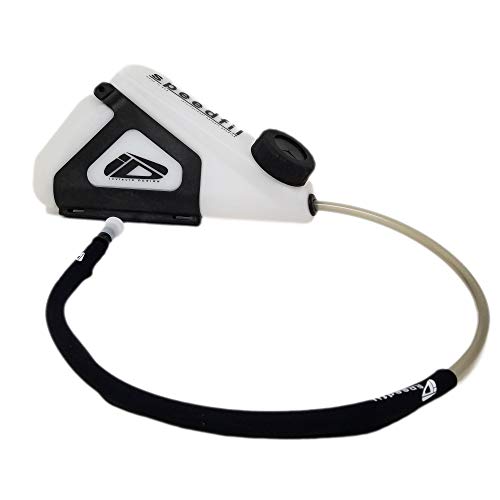
The Speedfil F1 is designed for frame-mounted hydration with a focus on hands-free drinking and minimal drag. Its refill port supports quick top-ups without disrupting line of sight or handling. The frame-mounted configuration helps lower the center of gravity, contributing to stable handling, especially on fast or technical courses. The design emphasizes not only aerodynamics but practicality, enabling athletes to maintain a smooth rhythm throughout long rides and tapering for race day.
- Aerodynamic, wind-tunnel tested
- Easily refillable on the fly
- Frame-mounted for low center of gravity and reduced drag
Speedfil F1 presents a practical choice for athletes who want a dependable, low-drag hydration solution that integrates seamlessly with a variety of frame setups and computer configurations.
Buying Guide
Front Mounted vs Frame Mounted Hydration
Front-mounted systems, like the Versa 200, Kompact 125, Hydroblade, and the Time Zone, place hydration between the arms for quick reach and reduced reach distance. They can offer easier refills mid-ride but sometimes add frontal area. Frame-mounted systems, such as the Speedfil F1, tend to keep the bottle lower and closer to the down tube, contributing to a lower overall CG and potentially less aerodynamic penalty on certain frames. Your bike geometry, cockpit width, and race profile influence which mounting style best fits your goals.
Aerodynamics and Drag Reduction
Most top-tier options incorporate CFD or wind tunnel insights to minimize drag. Look for features like streamlined bottle shapes, integrated airflow straighteners, and narrow frontal areas. Systems with a recessed or hidden profile between the arms typically provide the best aero gains, but may trade off refill convenience. If aerodynamics is your primary concern, prioritize front systems with well-documented drag reduction features.
Adjustability and Compatibility
A wide adjustment range is essential for fitting different aero extensions and rider preferences. MEGADJUST and similar mounting schemes help accommodate a variety of extension widths (often around 70–160 mm) and rotation angles. Also consider whether the system supports your aerobar brands and computer mounts, as compatibility reduces installation time and ensures data visibility during training and racing.
Accessibility and Refilling
Refill convenience matters during long events. Front-mounted systems often offer easier access without dismounting or losing cadence, while some frame-mounted options provide quick refill ports and secure bottle retention. Evaluate whether you prefer on-the-fly refilling, the complexity of the refill mechanism, and how often you expect to top up liquids during a ride or triathlon.
Installation and Maintenance
Installation ease varies by model. Some use clip brackets and Velcro straps for a fast setup, while others require more precise alignment. Maintenance considerations include bottle cleanliness, gasket integrity, and the ability to replace caps or seals without specialized tools. If you frequently change cockpit setups or travel with your bike, choose a system with simple installation and robust hardware.